Wednesday, August 27, 2014

Review: Guardians of the Galaxy

Guardians of the Galaxy (2014): Written by James Gunn and Nicole Perlman, direct by James Gunn.  Starring: Christ Pratt, Zoe Saldana, Dave Bautista, Vin Diesel, Bradley Cooper, Lee Pace, Michael Rooker, Karen Gillan, Djimon Hounsou, John C. Reilly, Glenn Close, Benicio del Toro.  Running Time: 122 minutes.  Based on the comics by Marvel Studios. 

Rating: 3.5/4 


            Like all cinephiles, I am prone to a certain amount of hype when it comes to certain films.  For me, it’s often the little touches that get me psyched beyond all rational measure, like Michael Caine quoting “Do not go gentle” in the spine-tingling new trailer for Interstellar.  And when looking at the general release list for this year, few films had larger hype trains barreling into opening weekend than Guardians, which is perhaps strange, given that nearly all the publicity prior to the film’s release consisted solely of a pair of admittedly expert trailers and seemingly self-generating buzz revolving around whether or not a movie featuring a talking raccoon and a living tree could possibly succeed.  Although, when you really think about it, given the earlier success of LOTR, the living tree part should never have been considered a hard sell, which really just left the talking ‘coon (voiced by Bradley Cooper, no less, although that was a casting choice to which my first reaction was, “Yeah, that make sense.”).  And while the box office results speak for themselves, and I am surprising no one at all in writing this, I have to say it anyway- Guardians more than lives up to the hype.  It is an awesome, well-crafted piece of giddy summer fun, and more than worth the extra money for IMAX if that is at all possible you. 

            While clearly an ensemble work ala Avengers, the focal point of Guardians, at least initially, is Chris Pratt’s Peter Quill, a human abducted by aliens right after his mother died of…..How I Met Your Mother Syndrome, I guess.  Or, as he prefers to be known, “Starlord,” not that anyone else bothers remembering it.  Working for an interstellar gang of junkers, he picks up a small, metallic sphere with intent to sell it to a dealer on planet Xandar, ruled by the Nova Force, which had just recently signed a peace treaty with the Kree.  A bit of advice early on, don’t bother thinking too much about the Nova Force, the Kree, and whatever sort of conflict they had, because the movie really doesn’t care all that much, and neither should you. 

            Such a simple plan, and yet, it almost immediately hits all sorts of snags.  The sphere in question, we soon learn, contains an infinity gem, meant to complement the one in the cube from the earlier Marvel films.  Thranos, aka That Purple Dude from the end of Avengers, sends his minion Ronan the Accuser, a Kree himself, to defy his planet’s peace treaty and wage war on all he finds standing between him and the gem.  Accompanying him are Djimon Hounsou as Korath (in yet another over-the-top villain performance, his second of the summer), Zoe "One Day I Will Be Wonder Woman" Saldana as Gamora, and Karen Gillan as Nebula, both adopted daughters of Thranos himself.  Saldana gets plenty of time to strut all her stuff on-screen, but I can’t help but feel that Nebula is a bit underutilized, given that she’s supposed to be on the same level as Gamora.  But then again, they were so confident they announced a sequel before the damn thing even opened, so maybe we’ll get to see more of her next time around. 

            In the meantime, Quill learns the hard way that he has a hit out on his head (and that he’s carrying far more than just some ancient artifact) when he gets attacked by both Gamora and the now-legendary bounty hunting duo, aka The “Dude, So Random” Reasons Your Ass Is In A Theater Seat, Rocket (a talking raccoon) and Groot (a talking tree).  And yes, there really hasn’t ever been another duo quite like this pair in a movie before, and it works.  Figures I would never be fully sold on a Bradley Cooper performance until I didn’t have to see his smirking mug.  But be that as it may, he has never been more compelling.  This is a movie determined to be nothing but breezy, screwballey fun, but Cooper and the sound/special effects team manage to let Rocket steal away with a few scenes of real emotion before all is said and done.  Obviously, I enjoyed Vin Diesel’s Groot as well, but I couldn’t get too teary over his performance, since the character copies more than a few aspects (and scenes) from The Iron Giant. 

            At any rate, in the midst of their 4-way fight, they are picked up by the Nova Force and arrested.  They eventually arrive at a floating prison space station, where they encounter Drax the Destroyer, a maniac determined to use Gamora to get a shot at Thanos, who previously killed his family.  Dave Bautista is a magnificent presence as Drax, easily my favorite character in the entire movie.  Together, they decide to bust out of jail and bring the infinity gem to another buyer, Benicio Del Toro’s Collector, to keep it out of the hands of both Ronan and Thanos.  And oh, how the hijinks ensue. 

            This is a good time, no deeper analysis needed, nor desired.  I love it when movies like this just toss us right into a new, strange, detail-filled world and don’t bother trying to over-explain things, so that we can get right to the adventure.  There’s even less expository dialogue than Pacific Rim, which HAD to start with its own short film in order for us to understand ANYTHING.  Here, the background info is just candy- if you are a fan of the comics or just love the minutiae of the Marvel universe, it’s there, but if you don’t care, you don’t need to. 

            As an adventurous screen trip, Guardians works as well as any summer action flick you can name.  Everyone on the cast brings it, not just Rocket and Groot, and the usage of oldie 70’s pop hits lends a carefree air to every scene, even the more serious ones, making it really, really hard to not spend most of the movie with a great big grin on your face. 

            It is not without its flaws- points off for yet another villain being far too hammy with far too little of interest in his character or backstory to make up for it, and even more points off for yet another climactic battle that is really just more of the same as far as pretty explosions and laser flashes are concerned.  That said, the way they actually resolve the final battle is the best conclusion to a fight I’ve yet seen in any of these films, so a few points given back for that.  It doesn’t really matter though, since the silly story and gaping plot holes are there but are never allowed to be of any real importance.  This is not a film banking on its story, so who cares if the whole affair is silliness piled on slapstick? 

            It is also a relieve to see an interracial cast finally getting their own flick to offset the extreme whiteness of The Avengers, with Zoe Saldana, Vin Diesel, and Dave Bautista offering up some of the best characters we’ve yet had in a Marvel- or indeed, any- comic book movie.  It doesn’t have the intelligent plotline of Edge of Tomorrow, nor the fierce visual flair of HTTYD 2, but it is fun.  Boatloads of fun.  And I love it for that. 


-Noah Franc 

Friday, August 22, 2014

In Memorium- Robin Williams


            I should not be writing this.  Like everyone else, I did not see this coming.  Like everyone else, I am saddened in ways difficult to put into words.  This is a tribute that should not have been written for at least another few decades. 

            And yet, here we are.  On August 11, 2014, Robin Williams committed suicide by hanging.  That someone who seemed to be so full of joy, and energy, and laughter could do this has shocked and upset both myself and pretty much everyone else I know.  In some cases, much to my disappointment, his death has brought out some of the worst bile humanity has to offer; his daughter recently announced the closure of her social media pages semi-permanently due to the level of vitriol thrown at her after the news broke.  But, I think, in many more instances, as sad and tragic and horribly unnecessary as this was, there are already glimmers of light breaking through.  The deluge of stories about Robin’s gentleness, his kindness, and his humanity surpass anything I personally recall seeing in reaction to a celebrity death.  There are no tales being passed around about how wretched he was off-camera.  No horror stories about the techies off-stage at a comedy show he hurled verbal abuse at.  All I hear about is about how he seemed to almost compulsively bring smiles to the faces of others, whether or not he was being recorded.  His death has led many to revisit his work in film, TV, and comedy with renewed appreciation for the wholly unique abilities he brought to bear, talents that few performers have ever been able to match.  And, perhaps most importantly, more and more people are now trying to have a serious dialogue about depression and its connections to both drugs and to the overwhelming cult of celebrity we all contribute to in one way or another.  People are reaching out to each other, both on- and offline, and that can only be a good thing. 

            I am not in a position to offer thoughts or judgments as to why he made this choice.  My own thoughts concerning suicide are very conflicted, to say the least.  And obviously, I never knew the man personally.  I just know that I am sad.  I suffer with regular (possibly manic) depression myself, and if there is one my own journey has convinced me of, it is of the necessity of always, always seeking humble compassion within ourselves for others in their own difficult situations, and if possible, understanding.  We never truly know what others go through.  Whether or not you agree with the decisions someone makes, or how they respond to whatever circumstances they’re in, you’ve got to have compassion.  There’s just no other way to handle things like this.   

            The curious thing I’ve noticed, though, is how so many people writing about him now are reflecting on how it really did feel as if they knew him personally, how, in whatever their favorite film of his was, it always felt as if the genuine Robin Williams, or at least a part of him, was reaching through the screen to speak with them on an individual level.  No matter what part he played, or what medium he was using at the time, regardless of the quality of movie or show he was in, he never came across as less than real.  He was like an extra crazy uncle for each of us- weird, eccentric, loud, perhaps a bit overbearing at times, and never staying away for too long at a stretch.  Or, as Mara Wilson phrased it (in a far more succinct form than I ever could), “We're all his goddamn kids too.” 

            I think there is ultimately no greater tribute to the immense talent and range of Robin as an actor, comedian, performer, and personality than to simply take note of the very, very wide range of films and roles being mentioned in the various memorials and “Best Of” lists now circulating the internet; Popeye, Good Morning Vietnam, Mork and Mindy, Mrs. Doubtfire, Aladdin, Good Will Hunting, Insomnia, Hook, Jumanji, Dead Poet’s Society, Patch Adams.  Just go over in your mind the incredibly wide range of styles, genres, topics, and characters those films cover.  That was what always impressed me the most when it came to Robin Williams- even if I didn’t like the film itself, I never found his performances anything less than interesting.  There are almost no performers alive today for whom an entire scene in the script could simply read, “Robin Williams does his thing.”  And the above films are not just seen on lists made by dedicated cinephiles- these are films mentioned by pretty near everyone, from lifelong critics to people who couldn’t be bothered to go to the theater more than once a year. 

            How many other performers have succeeded, over several decades no less, in having such a broad popular reach, in touching the hearts of so many generations through so many different performances?  Many, if not most, actors and actresses, regardless of how long they live or how many films they make, are only popularly remembered for one or a few key roles that “define” their careers.  Robin’s death happened to coincide with the death of another Hollywood legend, Lauren Bacall.  Even though she lived to be 89 and appeared in dozens of roles over the years, only a few of her movies (primarily her appearances with Humphrey Bogart and Marilyn Monroe) have seeped their way into general public consciousness.  Or look at the equally tragic passing earlier this year of Philip Seymour Hoffman- even though he gave us powerhouse performances in one incredible film after another, he was never the popular, household name Robin was- mentioning his name would not cause 15 different people to quote 15 different lines from 15 different movies simultaneously.  I say this not to imply that Robin was more talented or more worthy of remembrance than Hoffman or Bacall, just to point out that he had a very unique gift that most never realize, a way of affecting people on both an individual and a communal level, of making us feel collectively that he was speaking to each of us personally.  And he did so repeatedly over a career spanning nearly four decades.  What a wonderfully unique gift.  What a great emptiness left in its wake.   

            In keeping with the spirit of the current times, then, and as my own small gesture, the following are the Robin Williams roles that, for various reasons, stand out the most in my mind and have the greatest meaning for me personally. 

6. August Rush

            This movie has a number of issues.  Robin Williams is not one of them.  This actually happened to be the first film of his I saw where he was playing, if not technically a villain, certainly an antagonist.  Playing the huckster “Wizard” Wallace, he controls a small army of extremely gifted child street performers, who have to give him every cent they collect while out on the streets.  I admire the words the character speaks about the power of music, but it’s also fascinating to see the cold manipulation simmering just beneath the surface.  It’s a character who seems to have popped in from another, very different movie. 


5. The Birdcage

            It has been way too long since I last watched this one.  Robin Williams alongside Nathan Lane as a gay couple trying to hide their real personalities from an uptight, conservative couple for the sake of their son’s engagement.  Enough said, I think. 


4. Awakenings

            When I first saw this movie, I was as deeply impressed by Robin Williams’ underplayed, quiet-as-a-mouse Dr. Sayer as I was moved by De Niro’s powerful turn as an emotional child trapped in a paralyzed man’s body.  It is one of my favorite movies for both of these greats.  The scene that captured Robin Williams’ performance in it for me was when De Niro tries to force his way out of the hospital, and Sayer watches in agony as he is forced to the ground. 


3. Insomnia

            The lone Chris Nolan-directed work (thus far) that is a) a remake, and b) was not written by either him or his brother, Walter Finch is my absolute favorite of Robin’s villain roles.  A psychotic murderer who sees himself as the real victim, Robin is perfect in how he uses his mind-games to get under the skin of Al Pacino’s Will Dormer. 


2. Good Will Hunting

            A bit clichéd, perhaps, since this was the one that finally brought Williams his Oscar, but there is just something about the on-screen chemistry between Williams and Damon in their scenes that I can’t get enough of.  I especially like that one of the most famous scenes in the movie was an example of Robin drawing on his improvisational skills for heartfelt drama, rather than for hard laughs. 


1. Aladdin

            Have I mentioned on this this site yet that I am a 90’s kid?  Then let the record officially show that I am a 90’s kid.  Meaning that, as someone raised on the Golden Age of Disney, there will never be a role more definitive of Robin Williams for me personally than his pyrotechnical turn as the Genie in one of the top Disney films of the era.  You can feel the kinetic energy of the performance emanating off the screen.  This performance alone should have ended all debate about whether or not voice acting should be considered “real” acting.  It is one of my favorite Disney works from those years, and it is my favorite role by Robin Williams.  Rest in peace, at long last, Robin Williams.  You will be sorely missed. 


-Noah Franc


Tuesday, August 19, 2014

The Problem With Naruto


**note: this post assumes full knowledge of the latest developments in the manga.  That or apathy.  If neither applies to you, turn back now**

            I used to love Naruto.  I watched every episode of the anime right up through the first few arcs of Shippuden before finally jumping over to the manga, rereading the parts I’d seen in the show and continuing until I caught up with the latest chapters around 4-5 years ago (hooooooooly crap, has it been that long???).  And since then, I have never ceased to read the new chapters religiously, regularly checking my preferred translation sites every Wednesday until the new chapter pops up.  However, much to my dismay, Naruto has devolved rather sharply over the past few years, and is now slowly crushing itself under the weight of several very heavy millstones that Masashi Kishimoto has, for whatever reason, decided to throw around the franchise’s neck. 

            It didn’t have to be this way.  Naruto is (supposedly) ending for good this year.  After 8 years of following something on a weekly basis, that should mean something to me.  It should feel like a decently big moment.  But it doesn’t.  I’m tired, I’m frustrated, and I just want the series to end before it soils itself any further.  What the hell happened? 

            I always defended Naruto by pointing out the things it always had going for it.  It used to studiously avoid what has become known as the stereotypical DBZ trope, i.e., every single fight of consequence simply coming down to who could get the angriest, shout the most trite trailer quote, and pull the most broken energy beam that has ever existed (a benchmark broken season after season) out of their tightly wound ass, before proceeding to literally shove said beam down the villain’s throat.  While DBZ is now the standard example of this, many other anime have followed its lead, and it is the origin of one of the more unfortunate stereotypes anime is forced to suffer under.    

            Not that following such a formula is a guarantee of badness!  My love of DBZ continues unabated (and unabashedly) to this day.  However, it IS a style that lends itself to over-repetition, making the return on investment less with each passing season.    

            Naruto was different.  Yes, there were plenty of over-compensatory powers, but they were usually kept in tight check, with great emphasis being placed on the physical dangers of even having such powers, whether they belonged to a good guy or a bad guy, and no one- NO one- was invincible for having them.  Over-use of the eye techniques could lead to blindness, generating superspeed could leave one fatally exposed to a counterattack, and those with the strength to level mountains ran the risk of draining their chakra so thoroughly that they could easily end up in a coma, or left at the usually-absent mercy of their opponent.  Naruto, once he begins utilizing the power of the Demon Fox inside of him, has the ability to overpower any opponent and recover from any injury, but doing so too often threatens to shorten his lifespan.  Instead, battles between characters focused on cleverness, quickness, and real-time strategy, with many of the key fights being decided by split-second, small-scale tactics, as opposed to massive Flaming Kamehamehas.  Furthermore, a great number of battles ended indecisively, with no clear winner.    

            I think my favorite example of this is the final Chuunin-Exam face-off between Naruto, Sasuke, and a partially-transformed Gaara.  Sasuke goes all in, completely draining his chakra to hammer Gaara with his advanced fire attacks and the piercing deadliness of Chidori.  And it doesn’t work.  None of his techniques ultimately work.  Rather, it is Naruto, although not nearly as powerful or skilled as Sasuke (at least, at that point), who wins in the end.  And he doesn’t beat him by overwhelming him with his Demon Foxyness- he uses one random, on-the-fly trick after another to wear Gaara down, bit by bit, until he simply has no strength left with which to fight. 

            Naruto also used to have a fairly adult treatment of death, and of the nature of a life spent fighting.  Again, the much-ridiculed trope it avoids is a DBZ one, where the line between the living and the dead eventually became as flimsy as a cardboard shelter in a typhoon.  No such problem, at least at first, existed in Naruto.  Death was never shied away from, was always acknowledged as an unavoidable and key part of a ninja’s existence.  There were ways to perhaps briefly contact the dead, or even resurrect them, but the technique was so dangerous it was forbidden, and only used once prior to the war that has consumed the manga’s final arc.  There were a lot of moments spent with the older characters ruminating on the fights and the loss of loved ones that shaped them.  They were always side details to the larger story, but their presence added depth and complexity to what is, on the surface, a fairly straightforward hero tale, making the world seem grounded in reality despite its more fantastical elements. 

            Finally, and for me this is the most important point, Naruto was a story almost exclusively focused on the power of choice and of friendship; on how the decision we make, regardless of the reasons, shape our identities more than external influences, and how the people we choose to surround ourselves with can either lift us up or pull us down.  At the beginning of the tale, it is made abundantly clear that Naruto has had a really, REALLY crappy life.  Condemned from birth for being the carrier of a demon he never asked to have inside of him, he spends his orphaned years growing up alone and unloved, shunned by every single member of the village. 

            In short, Naruto had every reason to grow up angry, embittered, and vengeful, as Sasuke did.  But he chose not to.  Determined to succeed no matter what, and inspired by the offer of friendship of a single figure of authority, Naruto makes a key choice early in his life, and continues to make it throughout the series, even when it would have been far easier to sink into darkness and become another Sasuke, or Orochimaru, or Gaara.  He combines his furious drive to become strong with a conscious, repeated choice to show up all those who dismissed him NOT by hurting and killing them, but rather by protecting and helping them, by proving himself so thoroughly that they would have no choice but to change their minds.  And that aspect of the story, time and again, has been the difference, and was always what allowed him to make more and more allies to keep evil at bay.  More than anything else, the continued focus on the power of individual choice, and how that can create either love or hate in others, has been the defining feature of Naruto’s journey, and what has made the series more than worthwhile despite its own oddities and occasional shortcomings. 

            Note the repeated use of the past sense above.  Over the past couple of years, for reasons unfathomable, the manga has thrown all of these strengths out the window. 

            There has been no one, single, defining chapter or scene where all this changed.  It has happened so gradually that, at first, it was easily missed, or at least ignored in favor of everything the series still had going for it (the gathering of the 5 Kages in particular, along with their later battle against Madara himself, will remain high points of the series for me no matter how far it falls).  Nonetheless, the signs have been growing stronger over the past two years, to the point that I can no longer pretend to turn a blind eye.  I shall now try to elucidate on these problems now in (what else) list form. 

1. The friendship and group dynamics motif has largely (over the past 6-12 months, completely) disappeared. 

            This one has actually been going on for a fairly long time.  Since the Hidan/Kakuzu battle, the arcs featuring the varying group dynamics of the very large (and decently well-developed) generation of fighters Naruto, Sakura, and Sasuke are a part of have steadily declined.  Yes, many of the characters have gotten moments in the final war, but not nearly all of them, and the ones we did get were too little, too late.  Many of the best moments of the older arcs featured Naruto acting off those around him, and the lack of that over the past few years has hurt. 

2. Sakura has done nothing since the Sasori arc

            Also a longer-running issue; although Sakura was trained every bit as intensely by one of the Saanin as Naruto and Sasuke, and although Kishimoto gives her a lot of moments where she proclaims how advanced she is and how she can stand alongside Naruto and Sasuke, the promise of Sakura actually doing something substantial to defeat the villains has not materialized, and given where the story is currently trending, the possibility of it actually happening is probably near nil at this point.  Which is especially disappointing, because Sakura was the entire franchise’s primary chance to have a really awesome, kickass female character around to show everyone what-for.  What a big missed opportunity. 

3. Sasuke never stopped being boring as sin, and now his motivations don’t even make sense

            Sasuke was never a great character.  He had good potential- I actually did like the bravado dynamic he had with Naruto at the beginning of the series, and the set-up for the conflict with his brother was well-done, only slowly giving us the story through scattered flashbacks.  He certainly made for an interesting contrast with Naruto as someone who faced the same choices and chose the path Naruto resolutely refused to take.  But once he joined Orochimaru and simply disappeared from the story for huge swaths of time, reappearing only to reassure us that he now only cared about power and more power, killed off any interest I had in him.  And I know I am not alone in that regard. 

            Furthermore, and this is the worst part, his motivations no longer make a lick of goddamn sense.  Originally, his drive for power, and his reason for going dark, was to get revenge on his brother.  And he does, even though he technically lost the fight.  But let’s forget the fact that, even though he is a prodigy with unbelievable power, he has pretty much ALWAYS been crushed by his opponents, or merely won/survived on a technicality, since that could be interpreted as a metaphor of some kind (side note, I will never stop loving how the 5 Kages basically line up at the conference to all hand his ass to him, one after the other).  Instead, let’s talk about how catastrophically stupid it is that, even though it is revealed to him that Itachi did what he did to save both the village and Sasuke SEVERAL times, by various characters all across the good/evil spectrum, he repeatedly insists (rather arbitrarily) that he must now destroy Naruto and the Leaf to avenge Itachi, even though doing so would ruin everything Itachi worked for and would directly betray his brother’s intentions in keeping him alive in the first place.  Let’s talk about how he is even told this, directly to his face, by Itachi himself, and STILL plans to destroy the Leaf first chance he gets, but then suddenly changes his mind after hearing the EXACT SAME STORY just one more time, this time from the 4 resurrected Hokages themselves, and then promptly switches back to the good side and declares his intentions to become Hokage.  And is accepted back without any questions asked.   

            Or let’s not.  Because even having to summarize it once was stupid enough. 

4. The war has dragged on too long, with face-time between characters being far too uneven

            Ah, now we get to the more recent problems of the past few years, which have now cumulatively snowballed and piled themselves upon the above issues, which, prior to the war, were really just occasional frustrations or nuisances. 

            The idea of all the nations banding together to fight the forces of Akatsuki is actually a pretty cool idea.  Having that conflict take the form of a straight-up slugfest between two armies, not so much, largely because it means huge reams of time and panel space devoted to just establishing what is going on in each sector of the battlefield.  This means that the war has, in far too many spots, dragged on to seemingly endless lengths, often with months going by with very little advancement in the plot. 

5. The DBZ curse has come fully into effect, and the fights have become incomprehensible and boring

            All that I extolled above about the series taking the strategy-and-science aspects of its fights seriously no longer applies.  There were a few tricks used by various characters in some of the fights in the war, but the ultimate fate of the ninja world, it is now clear, will come down to Sasuke and Naruto combining to create the greatest Flaming Kamehameha Wave of them all, which will then be shoved down the throat of…..wait, remind who the new villain is again?  Alright, hold on, we’ll get to that later.  Also, the artwork of the fights itself has gotten steadily worse, to the point that I seriously can never tell what on earth is happening, which, for a Shonen action series, is basically a death knell. 

6. The series started to impress by going into serious, major-and-beloved-characters-will-die mode, and is now trying to pull back

            When you set up a massive, world-changing war, you can’t avoid inevitably killing off some major characters.  Whatever one may say about her books, Rowling embraced this in Harry Potter, pissing off plenty of people with some of her selections for the Reaper, but also demonstrating a not-insignificant level of guts in doing so.  Naruto should have gone the same way, and in fact started to.  Shikimaru’s dad and all the other sensors are killed shortly after the 10-Tails appears, and a few chapters later, Neiji sacrifices himself to save Naruto himself, providing one of the few really powerful character moments in the past few years.  And last year, Gai activated all 8 of the chakra gates in an effort to defeat Madara (something that, we had been repeatedly assured, would guarantee death), willingly offering himself up so that the younger generations can live. 

            At which point Naruto steps in, having been visited by the Sage of the Six Paths (more on that in a moment), touches him with his finger, and heals him instantly.  And he also gives Kakashi both his eyes back.  Oh boy. 

            Not only are more major character deaths unlikely at this point, and not only has Gai been spared what would have been one of the few genuinely powerful and kind of awesome deaths the series has ever had, but it also looks like Sasuke (or someone, whoever) might give us a repeat of when Pain brought back all the people he killed when he attacked the village, which itself brought the series a lot of flak.  I am not terribly upset at the notion, but at the same time, the series would have salvaged so much by really sticking to its guns and making us, the fans, swallow some hard sacrifices.  It would have given this final arc the weight it needs to really sink in, and now, I don’t think it will actually happen, which, like with the issue with Sakura, is really just a big, damn shame. 

7. The villain of the entire franchise has been summarily tossed out the window in favor of a hitherto entirely unheard-of demon as the “final boss”

            Spending years building up a single villain only to summarily throw them overboard in favor of a previously-unknown villain at the very end, unless for a very specific and well-developed purpose, is never a good idea.  Ever.  Especially when the actions of said villain are one of the focal points of the series.  Even with all of the other problems I have mentioned, having Madara around as the main villain would still have allowed us to have some investment in what happens, simply because it’s what we’ve been thinking about and debating for so long.  And now, that has all been replaced in favor of some crazy demon lady we had never heard a damn thing about until LAST YEAR.  Bad, bad, bad move; now I literally can no longer care what happens in the story, because I no longer have any long-running thoughts of importance attached to the villain. 

8. On that note, we have learned far too much about Zetsu

            Alright, I will admit, this is a purely personal grievance.  Zetsu was always one of my favorite characters in the show, just because he was so crazily weird.  A Venus-flytrap man, with serious split personality issues, who apparently eats people AND can instantaneously transport anywhere in the world via the Earth itself.  Oh, and he can split in two.  So strange, so freaky, and yet, so fascinating, primarily because we knew next to nothing about him, aside from what his primary powers were.  Now, we know everything.  And you know what?  His backstory sucks.  Both of them suck. 

9. It is pulling the tired bullshit of the villain being responsible for literally every bad thing that has happened in the world since its inception

            I hate this one so much.  I hate it when complex, intricate, and fascinating worlds are reduced down to the most tired of story tropes- everything bad that has happened was the will of a single demon/person/organization/what-the-hell-ever.  It is beyond lazy, and in this case, it ruins everything that made the world of Naruto so friggin’ cool.  Well, okay, not EVERYTHING….

10. Last, and most importantly, the entire concept of choice/free will has been removed from the plot wholesale

            This is the last and greatest sin committed by the series, because it renders the entire purpose of the dual journeys taken by Naruto and Sasuke, and by extension the entire damn franchise, entirely moot, aka pointless.  It is partially connected to the fact that the new evil force has apparently been controlling all evil deeds since time immemorial, but it adds insult to injury by going even farther.  Right as they are about to die from injuries Madara has inflicted on them (and right before Horseshit Lady appears), Naruto and Sasuke are both visited by the Sage of the Six Paths himself.  He informs them that the entire reason they ended up in conflict is because they are the reincarnated souls of his own two sons, who eventually begat each of their respective clans.  Every time one of them died, they were reincarnated in a form that guaranteed they would meet and become enemies again.  Finally, they were reincarnated into Naruto and Sasuke, meaning that the two of them were destined from birth to fight each other, but were also destined to be the ones to end the war and save the world. 

            This is so awful, so stupid, and so crippling to the franchise that it’s actually quite difficult for me to wrap my mind around it.  Let’s leave aside all the ways it makes no sense and kills any remaining dramatic tension by telling us EXACTLY how the rest of the story is going to go down.  Let’s ignore, for the moment, what I said above about the removal of the villain of the entire franchise eliminating any reason to be invested in what happens.  Instead, let’s talk about the real problem with this reveal. 

            Remember when I said, way up there in the first part of this post, that the real strength of Naruto as a story lay in its emphasis on the power of individual choice, and how the entire appeal of Naruto as a character lay in how consistently he made the right choice?  Yeah, this reveal shoots that right square between the eyes.  Because, if we accept this as serious, it means acknowledging that Naruto made all the decision he did not because it was the right thing to do, and not because he felt it was right, but simply because he had to, because it’s just what he was meant to do from birth.  Same goes for Sasuke.  All agency, all power of choice that made them both even remotely interesting, apparently never existed.  Everything that the entire franchise was supposed to be about, gone in an instant. 


            The cumulative effect of all this is that I am no longer excited when I open up the new chapter every week.  I always read it first now so I can get to One Piece as fast as possible, whereas until not too long ago I would always save it for last.  I am no longer excited to see how the series will end.  I am no longer sad, or nostalgic, or reflective, now that something that has been such a major part of my life for nearly a decade is almost gone.  Which, given my massive propensity for sentimentality, is saying quite a lot.  Instead, I’m exhausted.  Keeping up with the series is just plain exhausting, and at times, incredibly aggravating.  Not that that will convince me to stop.  I’m come too far now to not want to see what does happen.  But I no longer find any joy in it.  Realizing that doesn’t really make me angry, or sad.  Just disappointed.  Which is worse, in a way. 

            It didn’t have to be this way.  But it is, and sadly, there is no changing that.  At least I still have the first few hundred chapters and the original anime series to enjoy again and again.  The luster of those halcyon days will never fade.  Perhaps, once this is all over, and I’ve given myself time to heal, I’ll go back and rewatch the Zabuza arc for the first time since high school.  Get that old excitement back.  Perhaps. 


-Noah Franc 

Monday, July 28, 2014

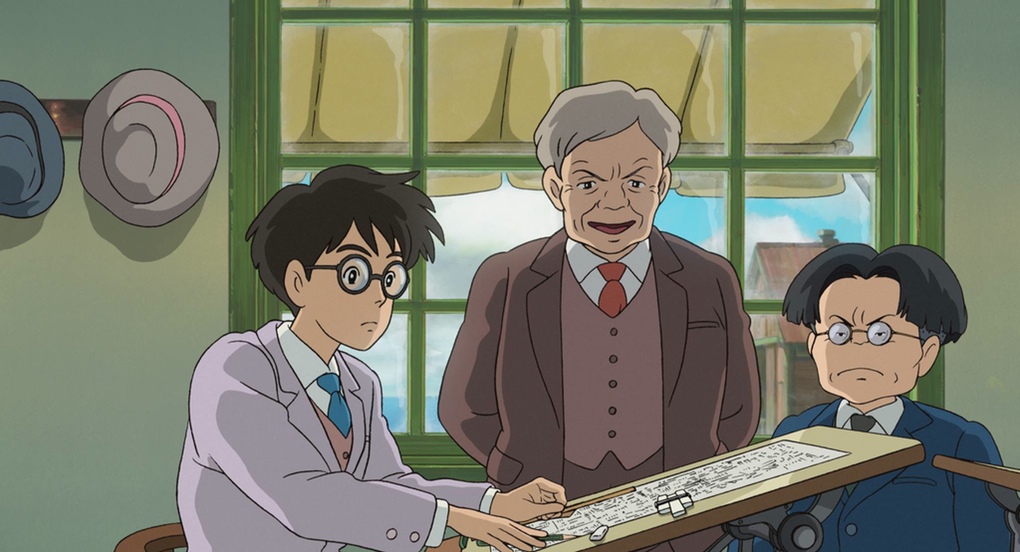
Review: Kaze Tachinu (The Wind Rises)

The Wind Rises (Kaze Tachinu): Written and directed by Hayao Miyazaki.  Starring: Hideaki Anno, Miori Takimoto, Hidetoshi Nishijima, Masahiko Nishimura, Steve Alpert, Morio Kazama, Keiko Takeshita, Mirai Shida, Jun Kunimura, Shinobu Otake, Nomura Mansai.  Running Time: 126 minutes.  Based on the manga by the same name by Hayao Miyazaki 

Rating:  4/4

**spoiler warning- there’s a lot I want to say about this movie, and much of it will require me to delve into the content of the entire film.  Not that it’s really a “story movie” anyway, but for those of you who avoid any spoilers on principle, here’s the fyi**

            If you had taken a census of Miyazaki’s most devoted fans, critics, and all-around cinephiles that have followed his career over the years and asked them to opine on what they would envision his last film to be like, The Wind Rises would not be it.  Ironically, that makes it, in many respects, a quintessential Miyazaki film, because what else has drawn us to his work over the decades, other than the fact that his films are never quite what we thought they would be?  Each one has been something refreshingly new, often something at complete odds with what came before.  In this aspect, The Wind Rises is no exception.  Whether or not it will have the staying power of his earlier works, and whether or not there is more than in some of his other films to actively criticize, remains to be seen. 

            The Wind Rises is a heavily fictionalized account of the early life of Jiro Horikoshi, the designer of the Zero fighter plane, a huge technological leap forward for the Japanese air force during WWII that temporarily outstripped all other planes in the world, and which were later made infamous by their use as suicide vessels by kamikaze pilots towards the end of the war, often to devastating and horrifying effect.  When the film opens, however, none of that dark future exists yet for Jiro.  He freely dreams of a bright, sunlight-and-color-filled sky, through which he flies his own imaginary plane as the morning sun streams over the hills.  It’s the ultimate escapist fantasy, flying over house and field as the people look up in wonder and awe.  However, even at that age, premonitions of a dark future start creeping in to his consciousness- a massive zeppelin adorned with the Iron Cross looms suddenly out of the clouds, armed to the teeth with bombs and muttering shadows that will remind many of the night spirits in Princess Mononoke.  A large, undulating torpedo strikes his craft, shattering it, and he falls. 


            It is a scene meant as a premonition for what is to come.  Since his own eyesight is too poor for flight school, Jiro eagerly decides to pursue studies as an engineer so that he too can one day design the planes he loves so much.  Beginning then and continuing throughout his life, he is encouraged by the Italian aircraft designer Caproni.  Or rather, by his imaginary version of Caproni.  Every so often, usually when Jiro is at a low point in his life, Caproni visits him in his mind, the “kingdom of their dreams,” as he puts it, where they straddle the wings of planes in flight and ponder why they are driven to build machines that they themselves will never use, especially machines utilized for war. 

            Later, on his way to the university to pursue his higher studies, the train is stopped by what is now called the Great Kanto Earthquake, which utterly devastated Tokyo in 1923.  A shadowy wave approaches the coastline, and the houses and ground rise and fall like bedsheets being shaken out in the morning, while the Earth groans like some monstrous beast waking after centuries of sleep.  Trying to make sense of the disaster after leaving the train, he stops to help the mother of Naoko, a pretty young girl who happened to catch his hat earlier as the train sped over a bridge.  They will eventually be reunited, at a mountain resort where they fall (rather quickly) in love, and soon after marry, even though she is suffering from incurable tuberculosis. 


            Before their reunion and marriage, however, Jiro finishes his studies and begin work at Mitsubishi, which at that time was feverishly churning out new airplane designs in the hopes of winning much-desired government contracts for the military.  For most of the rest of the movie, we follow the various events and experiences that eventually inspire Jiro to create the Zero.  As his vision approaches reality, however, Naoko grows sicker and sicker, eventually dying the same day as the first test flight of Jiro’s plane.  The conjunction of these two moments (although said death is not depicted on-screen, but rather heavily implied) seems to be a sharp and biting allegory for what the birth of the Zero plane signified- its creation may have been inspired, impressive, and technically ingenious, but it also heralded in an even more deadly phase in the Sino-Chinese war, and would be responsible for an immense amount of destruction and death in the wider World War just over the horizon.  As it touches down, the technicians and military higher-ups exuberantly celebrating, a person of beauty, innocence, and purity leaves the world forever.  Jiro’s much longed-for convergence of dream and reality brings in destruction on an unimaginable scale, and pushes out love and joy.  The war that has haunted Jiro since his childhood has caught up to him at last. 
           
            There are two major themes in The Wind Rises that I felt to be of paramount importance.  One is, rather obviously, wind itself, and all the forms that it can take.  The title of the movie is taken from a line in a poem by the French writer Paul Valery, called “The Graveyard By The Sea,” and is recited several times by various characters; “The wind is rising.  We must try to live.”  And rise the wind does, in many forms and in many ways, representing beauty, kindness, and gentleness, but also the overwhelming tide of events in which an individual like Jiro, no matter how well-intended or idealistic, can become utterly lost. 

            Sometimes, the wind pulls gently at the grass in the field, accentuating the beauty of the natural world.  Other times, it tears at the clothes and rips an umbrella out of someone’s hand.  The wind both lifts up the airplanes of Jiro’s dreams and those of his reality, but is also capable of ripping them apart at the seams, and does so quite often.  It can lead to beautiful moments, like the wind that blows Jiro’s hat into Naoko’s hand, but like that selfsame wind, it can also herald ruin, blowing the searing ash and embers from the first fires started by the quake in every direction, causing whole swaths of the city to be consumed in flame.  The wind is a force inexorable, far beyond any one person’s ability to contain, much like the fate that envelops both Jiro and his country.  And yet, as the original poem itself suggests, even when faced with an overwhelming tide, we are still driven by a yearning to go on, to continue even when it seems that all purpose in doing so is lost.    

            The second major theme within the film is that of dreams, and of where the lines between dream and reality can be drawn.  In several scenes, characters refer to life as wondrous, something dreamlike at its best, and it is from such a dreamlike state that Jiro seems to perceive much of that which happens to and around him, as if he is permanently emotionally detached from the world.  His sleeping and waking fantasies of flying, both the wonderful and the terrible, are freely interspersed with his supposed waking moments, to the extent that it’s often hard to tell them apart at first.  Conversation with fellow engineers will suddenly shift to include images of the plane in flight, and those present react as if they all were seeing the same image.  Even the “real” parts of Jiro’s life come across as dream-like; there are no clear transitions from one scene to the next, and sometimes we only learn several minutes into a conversation that several years have gone by.  In this sense, the film itself is much like a dream- a scene begins, and we have no idea how Jiro got there, or when, and why- he is simply there, and we must observe what transpires.  Perhaps the entire film is a dream, woven out of the fabric of Jiro’s first literal flight of fancy in the very beginning. 


            That the technical side of the movie- the quality of its animation and the effectiveness of Joe Hisaishi’s soundtrack (not, perhaps, as memorable as his work in other Miyazaki classics, but still fitting for the work’s tone)- is without reproach is beyond question.  Where I (and a great many other critics) found fault in the film was more in the specifics of its story and execution.  I do not believe I can overstate how much of a slow-burning film this is.    I have stated previously that many of the scenes transition with effectively no fanfare.  A great number of said scenes are dominated by technical talk concerning the mechanics of aviation.  This is not to say that these scenes are bad- I found them fitting in the context of the film- but I cannot blame anyone who finds the film so boring that they mentally check out before the end (which I a shame, because I believe it’s in the last act of the movie that the entire enterprise comes together). 

            Further criticism can be made of Jiro’s relationship with Naoko, who, it becomes fairly clear, exists simply as an object of beautiful and innocent perfection for Jiro to lose at the necessary moment.  This will be particularly surprising for some, given the incredible roster of female characters (both leads and supporting) that Miyazaki has provided us over the years.  As stated above, I found her character and their relationship as a whole to be more of a metaphor for the costs of militant nationalism, but again, the implications that that is the intended interpretation are small indeed, so like with the film’s length, I can sympathize with those who found it to be something of a distraction (indeed, my favorite aspects of the film were those that had nothing to do with Naoko).    

            Neither of those factors, however, has been nearly as great a source of division and controversy as the simple fact that the overarching aim of the film is to portray Jiro in a sympathetic, and in some respects flattering, light.  At this point, I must move away from the film to provide some needed historical context for the piece.  At the time that Jiro was working at Mitsubishi and designing the Zero, Japan was not only in the process of militarizing and brainwashing much of its citizenry in preparation for war against the United States, it was already engaged in one of the most brutal conflicts in history, its invasion of Korea and mainland China.  The atrocities committed by Japanese forces, which I will not list here, are a point of contention between Japan, China, Korea, and other Asian nations to this day, in large part due to continued efforts by the Japanese government (and by a not-insignificant size of Japan’s population as a whole) to either deny outright or simply ignore many of the worst aspects of Japanese wartime policy.  Although Jiro was not directly involved in military policy or wartime operations, his Zero added its own dimension of destruction and pain to the conflict, even before it became the suicidal coffins for scores of young Japanese pilots. 

            What has inspired so much controversy and passion is the fact that none of the above- the brutality inflicted by the Japanese in China and other places, the militarizing of the society, the repression of dissent and free speech- is directly shown or alluded to in the film.  Not that the war is ignored.  Jiro’s co-workers refer several times to the winds of war everyone knew was coming.  At the resort where Jiro and Naoko are reunited, a German fleeing the Nazis compares the place they are all at to Thomas Mann’s “Magic Mountain,” a place where anything painful or uncomfortable can be forgotten; “The war in China?  Forgotten!  The puppet government in Manchuria?  Forgotten!”    


            This lack of open, direct acknowledgement of Jiro’s part in the war is, in the eyes of some, exacerbated by the final scene of the movie; he is once again in his dream world with Caproni, except now the ground is littered with the charred bones of his Zero, all destroyed.  After commenting to Caproni that the world of his dreams has now become his own personal hell, he says wistfully, “None of my planes returned.  Not one.” 

            For some critics, this is a callous effort to further feed the Japanese tendency of simply not acknowledging the suffering caused by the war outside of that which Japan itself experienced.  It can be argued that, through the line, Jiro is expressing his sorrow over the pilots and their victims AS WELL AS the planes, but again, that is very much open to interpretation.  Despite that aspect, however, the rest of the film is clearly very anti-war in general.  Both the film and its creator very much embody this strange divide.  Miyazaki cannot be accused of ignorance when it comes to WWII- he has spoken openly of Japanese wartime policy in the past, and has adamantly opposed Shinzo Abe’s efforts to rewrite Japan’s strictly pacifistic post-war constitution.  When interviewed about the film, he stated quite firmly that the Japanese government acted out of “arrogance,” and sowed the seeds of its own destruction.  On the other hand, he holds Jiro as blameless, as a visionary whose admittedly impressive creation was twisted by others for dark uses.  He says that his primary inspiration for the film was a single line from Jiro’s memoirs, written long after the war’s end; “I just wanted to make something beautiful.” 

            Miyazaki clearly takes Jiro at his word.  Others do not.  Audiences and critics, both in Japan and abroad, have been as starkly divided over the film and its subject matter as he is.  Some on the conservative end of the spectrum have attacked the film for containing what veiled criticism of Japanese wartime policy it does have, with a few even going so far as to label Miyazaki “anti-Japanese.”  Conversely, many on the Japanese left, as well as in countries that suffered the most from Japanese aggression and the abilities of the Zero plane in particular contend that Miyazaki does not go far enough, that he ignores not only the horrors of Japanese aggression in general, but also what aspects of said aggression can be linked directly to Jiro’s life and work; another historical side unacknowledged by the film is the fact that many of the Zero fighters produced during the war were assembled by Korean laborers (read; slaves).  One Korean-American critic, Inkoo Kang, wrote the following in her response to the film; “The Wind Rises is just one film, but it echoes an entire country’s obsession with misremembering a deeply painful and extraordinarily violent past. Japan’s wartime victimhood is a convenient lie its citizens have told themselves for decades. That the aging Miyazaki has misguidedly lent a patina of wistful beauty to that lie is a shame. The Wind Rises ends the illustrious career of a treasured visionary on a repellent, disgraceful note.” 

            Even the question of slave labor during the war, however, is not ignored entirely.  When lamenting to Caproni over how his planes are being used, Caproni simply tells him to think of the pyramids, asking if he thinks the world would be better without them.   The implication here seems to be that even though the pyramids, which were also constructed with slave labor, most definitely caused great suffering for many, the world would still be a poorer place if they did not exist.  Whether or not the pyramids are comparable to fighter planes is, again, open to debate. 


            By now, you are undoubtedly wondering where I stand on all of this.  And to be honest…..I am not sure.  In fact, during the process of writing this review, I have openly worried on more than one occasion that my deep and abiding love for Miyazaki’s works makes me biased enough to overlook the questionable way he tackles history, or whether or not his treatment of the film itself as something like a dream, drenched in unspoken and vague metaphors, really works the way he wanted it to.  Even when you disagree with Miyazaki’s basic assumption underlying the film, that Jiro himself is someone to be admired for his technical genius and his fierce passion for the dream of flying, his deep-seated belief in the ultimate beauty of human effort has never shone through more clearly.  In several scenes, the parts of the planes being tested are seen being taken to the field cleared for flight by oxen-drawn carts, led by the poorest of farmers.  Human dreams so often exceed the reality in which they are born, but there is nobility in the dreaming, even when it is surrounded by chaos. 

            On the whole, though, there are enough aspects of the film itself that, in my opinion, do not work as well as they should, enough that I do not think that, on its own merits, the film is on the same level as Princess Mononoke or Spirited Away.  While I personally do not feel that the film is historically or culturally insensitive in how it treats its subject matter, I cannot blame others for disagreeing.  In his (seemingly) final cinematic act, Miyazaki has given us what may or may not be among his greatest works, but what is, I think, his deepest, most complex, most mercurial, and most intimately personal creation out of everything he has made.  As a result, The Wind Rises shows us, perhaps, much more of his own personal and cultural flaws, biases, and idiosyncrasies than we’ve seen before, including the ones many find objectionable. 

            Where The Wind Rises DOES succeed in achieving greatness is in how its very existence provokes questions far above just those limited to the story and subject of the actual film.  Spoken and unspoken meditations on war, peace, love, innocence, and the divergence between dreams and reality permeate each frame and are enough on their own to provoke hours of deep discourse.  But what it also provokes are questions and uncertainties regarding the very nature of art itself, and of the artists who take it upon themselves to create.  When using real events as a baseboard, what are the artist’s duties to the historical truth, if there even are any?  Can we fairly criticize an artist for focusing on some aspects of the story and ignoring others, regardless of their reasons for doing so?  And if we can, where do we draw the line, and how do we tell when an artist has gone too far, or not far enough?  To what extent can we say that someone is guilty by association, even if they only indirectly contribute to a crime? 

            I do not know the answers to any of these questions.  I do not know yet if The Wind Rises really is one of Miyazaki’s best works.  I do not know if it is so reprehensible in its avoidance of the dark side of Japanese wartime history as to be considered his “worst” film, at least from a moralistic perspective.  What I do know is that I was moved in ways I could not begin to put into words by the movie.  Not in great emotions, but in small shifts in my thinking.  I know that I have thought long, and hard, and deeply, far longer than I normally do before writing up a review.  I have read an uncounted number of reviews and reactions to this movie while writing my own, far more than I usually do.  I have asked myself a lot of questions, and have actively worried about my own biases and viewpoints coloring my perception of Miyazaki’s more debatable decisions in the film, also something I rarely give extensive thought to. 

            And is it not a blessing for us to be presented with something that makes us question so deeply, that defines easy generalizations and simple lessons?  Is it not a gift, to be challenged to reevaluate and redefine our individual attitudes and approaches to art and objective truth, and the divergences between the two?  Even if, after considering all this, one feels compelled to condemn the film for its flaws and how it treats its subject matter, was it not wonderful to be able to assert so clearly what one thinks and why?  Hayao Miyazaki has, once again, provocatively pushed the boundaries of our perceptions of the kind of stories animation can tell.  He has had his visions, and his dreams, like Jiro.  The hesitation and, in some cases, anger and/or frustration that this last work has caused aside, I would like to think his efforts to make those dreams a reality have been far more beneficial, inspiring, and life-giving than the Zero ended up being.  He has let his mind soar on the back of the rising wind.  He has lived. 

            And now it’s our turn. 


-Noah Franc 


Friday, July 18, 2014

Review: How To Train Your Dragon 2

How To Train Your Dragon 2 (2014): Written and directed by Dean DeBlois.  Starring: Jay Baruchel, Cate Blanchett, Gerard Butler, Craig Ferguson, American Ferrera, Jonah Hill, Christopher  Mintz- Plasse, T.J. Miller, Kirsten Wiig, Djimon Hounsou, Kit Harrington.  Running Time: 102 minutes. 

Rating: 3.5/4

            As far as animation goes, 2014 is already leagues ahead of last year’s disappointingly lackluster offerings, with the off-the-wall and brilliantly deconstructive Lego Movie and the mind-boggling plays on gravity in Patema Inverted easily outstripping every single major animated film released in 2013 (yes, including Frozen).  Awaiting all of us down the line is the newest work from the Wunderkinds at Laika Animation, The Boxtrolls, along with the German theatrical release of Miyazaki’s The Wind Rises.  And now we have How To Train Your Dragon 2, yet another incredibly effective sequel from Dreamworks Pictures, which has basically become the Anti-Disney/Sky Blue in terms of how to handle franchises with respect and dignity. 

            Like with Dreamwork’s other two remarkably excellent sequels, Shrek 2 and Kung Fu Panda 2, Dragon 2 builds expertly off the fascinating and potential-filled world of the first movie without repeating storylines.  It has been 5 years since Hiccup (Jay Baruchel) lost his leg in a fight against a massive alpha dragon near the village of Berk.  Now, the lives of the Vikings and the dragons are intertwined, the village having been expanded to include dragon stables, smithies designed to create dragon armor and saddles, feeding and washing machines, and a massive arena for the sport of dragon-riding, which involves using hilariously expressive sheep like footballs. 

            The opening scene showing this sport is a thrilling pull into the movie’s world, and it expands in meticulous detail when it cuts over to Hiccup, pointedly avoiding both the game and (as we learn later) his father Stoic (Gerard Butler at his most Scottish), who has decided he wants Hiccup to succeed him as chief.  His opening flight with Toothless is reminiscent of their first transcendent exploration of the skies in the first movie, but on a far grander scale.  They dive underneath the tails of great waves, and soar through veritable cathedrals of clouds, before Hiccup tests out his new gadget- a set of his own wings and fin to allow him to glide along the clouds next to Toothless.  Oh, that and he also wields a sword that shoots out both fire and combustible gas. 

            Even though he is extremely uninterested in becoming chief as per his father’s wishes, both his life of exploration and his deepening romance with Astrid (America Ferrera) seem to be pretty much ideal.  The threat of open war, however, comes knocking in several forms; an encounter with an arrogant dragon hunter names Eret (voiced by Kit Harington of Game of Thrones fame), the appearance of a mysterious vigilante dragon rider, and rumors that a vicious warlord named Drago Bludvist (an ever-solid Djimon Hounsou) is once again on the march.  And that is where I will cease any explicit mentions of the story, because the turns this movie takes are too good (and in some cases, too dark) to even contemplate spoiling. 

            Now hang on a second, I know what you’re thinking- don’t the trailers already the spoil the big reveal that the wild, masked dragon rider is actually Hiccup’s Mother?  Well, yes, they do, and yes, that was incredibly stupid of them, because that reveal is a great scene that would have packed a wallop had it been kept under wraps.  However, in some ways that lone tidbit ends up being a bit of a false herring.  She appears fairly quickly in the movie, in the first act, and after that there is another solid hour or so of narrative turns that you rarely ever see in a children’s movie, or at least ones you don’t see outside of greats like The Iron Giant.  Themes like handling physical disability, the merits of pacifism vs. active self-defense, the loss of a parent, the aging love of a middle-aged couple, and even sexuality (I swear to God, I am not pulling your leg) all come in to play at various points and to varying degrees.  Can anyone here think of another “kid’s movie” from the States that touches on all of the above within an hour-and-a-half?  Because I can’t.  Certainly nothing from Disney, or any other works by Dreamworks.  Even Pixar can’t boast that impressive a checklist (Up being perhaps the closest). 

            That said, I can’t pretend there are zero issues with the story.  The prevalence of so many themes and ideas means that some are left more unexplored than others, especially when you consider that, you know, being a children’s film and all, the movie is also required by law to be under two hours while still hitting the needed story beats to make it “marketable” (translate to “normal enough for adults to be okay with it”).  In particular, I was sorry to see Astrid play much more of a side role than she in the last film, and although I am interested to see what they do with the third film slated for release in 2016, I will be sorely disappointed if she does not get a much expanded role. 

            Even though, as with many American animated films, I can’t help but wish for just a bit more, there are so many moving pieces hitting the right notes that I can’t help but love this movie, warts and all.  When given the choice, I will still pick hand-drawn or stop-motion animation over CGI anyday, but there’s no denying how far the technology has come in the last few years.  The texture of the characters, the dragons, and the land they inhabit is sharper and more detailed than ever before, especially when I compare it with the first film, which now actually looks slightly dated in comparison.  The flight sequences embody the kind of no-holds-barred freedom employed by Patema Inverted in the floating chase sequences.  Even if you don’t see it in 3D you’ll want to jump out of your seat and fly right along with Hiccup. 

            Like with the first one though, this film is also far more than just a series of pretty images.  The soundtrack, again provided by John Powell, ranks alongside the score for Unforgiven as one of the best I’ve yet heard this year, although I did miss the absence of the music used in the initial teaser trailer.  There are a lot of character moments that reach beautiful emotional heights.  Hiccup’s relationships with Astrid, Stoic, Gobber (Stoic’s close friend and advisor), Toothless, and later his mother (whose name, we learn, is Valka) are not phoned in- they are dynamic, trusting, unique, and feel eminently real.  This goes double for the scene where Stoic and Valka are reunited after nearly 20 years of separation, which, unlike the occasionally overblown Fault In Our Stars, actually did get the tears gathering around the edges of my eyes. 

            There are fights and battles in the climactic third act, but they ultimately carry less weight by the end and simply don’t feel as significant (although their scale is nothing but impressive), because the really great stuff in the movie centers around the characters.  Which is, in my mind, as it should be.  How To Train Your Dragon 2 is a great movie, a wonderful visual adventure to experience, and is another rare film where the extra cash for the 3D is absolutely worth it.  It goes big on the animation and action, but anchors itself in the small moments that make us actually want the good guys to come out okay.  Which sets it leagues ahead of most big-budget summer flicks these days. 


-Noah Franc