Thursday, January 30, 2014

Review: The Wolf of Wall Street

The Wolf of Wall Street (2013): Written by Terence Winter, director by Marin Scorsese.  Starring: Leonardo DiCaprio, Jonah Hill, Margot Robbie, and Matthew McConaughey.  Running Time: 179 minutes.  Based on The Wolf of Wall Street, by Jordan Belfourt.

Rating: 4/4


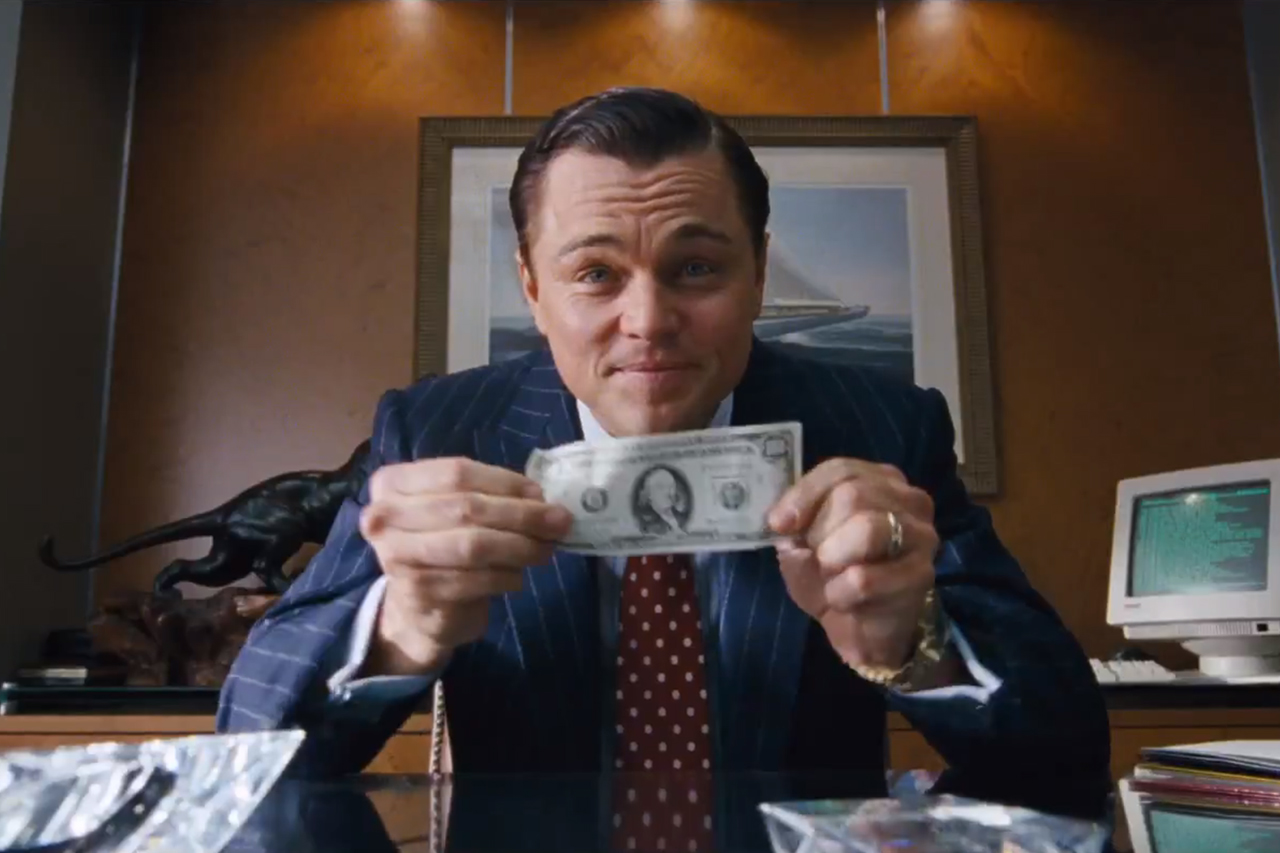
If there was one thing that pleasantly surprised me about The Wolf of Wall Street, it was how cleverly subtle and subversive it is.  Yes, I am still referring to the movie that includes, among other things, midgets being hurled at dart boards, a gay orgy, several straight orgies, a woman being punched in the stomach, and Leonardo DiCaprio having a lit candle stuck up his butt.  No, I have not lost my marbles (yet).  When you dig down beneath the leery, drug-and-prostitute-filled skin of this film you'll quickly find a wealth of unspoken commentary and reflection on our male-dominated culture of corporate aggression, the emptiness of American dreams focused solely on getting "more," and, most importantly, on how (and why) so many of us just don't care enough to want to genuinely change a system designed to repeatedly create people like Jordan Belfourt.

Belfort, as the beginning of movie informs us, started out as a not-so-depraved (but still determinedly greedy) underling on Wall Street shortly before the Black Monday crash of 1987.  While the crash does cause him to lose his job at one of the big-time firms, he's there just long enough for Matthew McConaughey to instill in him the basic principles of being an effective stock broker; regular alcohol intake, frequent service by prostitutes, and most importantly, lots and lots of crack, to keep one "sharp between the ears."

With these Holy Commandments inscribed in this mind, Belfort decides to remake himself and build his way back up by using his white-collar selling skills to sell so-called "penny stocks," cheap stocks for mostly doomed companies that only those with absolutely no financial understanding whatsoever could ever be convinced to buy.  He recruits his own team of amateur salesmen, people he can remake in his image, starting with Donnie, played with gusto by Jonah Hill, a man who becomes even more brutally depraved than Belfort (if that's even possible).  Before long, their lives are one long stream of financial crimes, fancy clothes and cars, prostitutes, drugs, more prostitutes, and more drugs, continuing almost unbroken throughout the entire film, until a determined FBI agent nabs Belfort and most of his original team, bringing both them and the company as a whole crashing to the ground.

I suppose saying that constitutes a spoiler of sorts, but in this case, I think it's justified, because a) even though Belfort's story is a more obscure piece of economic history, it's part of public record, and b) the movie really isn't about the story or plot any more than it's about the clothes Hill and DiCaprio wear.  This is a film built solely around recreating for the uninitiated the worldview of the addict, and getting its viewers into a mindset where extensive property damage, staggering levels of drugs and sex, unending domestic abuse, callous disregard for average folks, and needlessly-complicated money laundering schemes are commonplace, almost daily occurrences.  And it succeeds, to a painfully dizzying degree.

The running time and the film's appropriately obsessive determination to make us feel every high, every crash, and every successful rip-off of some poor working-class schlub makes for a grueling and exhausting experience- by the end, I felt as thoroughly worn out as DiCaprio looks- but it works to a remarkably successful degree.  It's almost as if Scorsese took a second look at his last work about a former criminal neither repentant nor ashamed of his actions (Goodfellas) and thought, "You know, I think I can do one better on that."  Part of this is due its filming and editing style, as fascinatingly cluttered and hectic as the loud, physically exuberant rapid-fire environment of a broker office.  Or as Belfort refers to it during the opening, "the sound of money."

For all his immense and deservedly legendary talents (all of which are on full display from start to finish), Scorsese can only get half credit here, as his energy is matched beat for beat by one of the year's stand-out lead performances and ensemble cast.  DiCaprio has rarely been better in his career, and if he were in a less-crowded Best Actor category, this is the role that would finally win him his Oscar gold.  And I think it's also safe to say that we can put to bed any lingering doubts that Jonah Hill's nomination for Moneyball a few years back was a fluke.  Individually, each are fascinatingly disgusting parodies of many of humanity's worst traits.  Together, they are a veritable whirlwind of insane destruction, leaving very little unbroken in their wake.

Like those who insisted that last year's Zero Dark Thirty endorsed torture, and that Django Unchained was racist, a fair few have attacked this movie for failing to more overtly and blatantly condemn the crimes of Belfort and his associates.  And, just like last year, my response is if that is what you honestly think after seeing the film, you just didn't look hard enough.  To tie this review back to my "subtlety" comment above, even when the movie's disgust with its subject is largely unspoken, it is still there.  Halfway through the film, Belfort dumps his high school sweetheart for a trophy wife, spending scenes describing his addiction to her body and detailing how his sex-filled bachelor party cost him millions upon millions of dollars, not to mention the fairy-tale wedding they had right afterwards, and once all that fades away, what do we see in the next scene?  The two of them screaming at each other 18 months later, which Belfort says had already become their morning ritual.  All that money, all those drugs, all that sex, and all those material riches, and the only thing it brings him is obscenities, hurled at him by the one person supposed to be closer to him than anyone else in the world.  If that is not enough of a commentary on the sad nature of such a life, then I ask you, what is?  

Furthermore, and herein lies the true twist of brilliance in the film, it points blame in two directions at once; the one at Belfort, for the very real crimes he committed, and the other, at us, the audience.  We are repulsed by Belfort, yes, and we are quick to condemn his drug abuse, or the fact that he hits his wife, but we also can't (or rather, we shouldn't) ignore the fact that we enable him and everyone else like him.  The final shot of the film- the very last thing we see- is not Belfort lying broken in a ditch, or in jail, or weeping in shame.  We see ourselves- another audience, staring at him with rapt attention as he teaches them how to sell.  We created a world where he could exist, where other like him could thrive.  And the scariest thing is when the movie ends, and you realize that between then and now, nothing's changed.

History does not happen in a bubble.  The crash that set up Belfort's path happened in the 80's.  His scheme came to light in the 90's.  And just 15 years or so later, the exact same sort of aggressively greedy characters- people who maybe don't do as many drugs or screw as many prostitutes as the film's Belfort does, but who have the same juvenile, male drive on autopilot- were left free to work their devious magic again, with results even more far-reaching and tragic.  And as of right now, it's only a matter of time before it happens again, because, again like Belfort, those responsible the last time around were never brought to task.  Never made to feel the pain they'd inflicted on so many others.  And it's that brutal reality that Wolf brings home so effectively.  It's three full hours of the male id on overdrive, and it's because of how well it does that, not in spite of it, that The Wolf of Wall Street is one of the best movies of the year.

So take a good look, people.  Set an evening aside in the near future to watch Wolf of Wall Street.  Pay close attention to it.  These are the people we worship as exemplars of working hard to achieve the American dream.  These are the much-lauded "job-creators" we apparently can't live without.  These are the men (emphasis on men) to whom we have granted custody over our financial and economic health.  These are the people our politicians don't dare offend with higher taxes.  Are you pleased with our choice?

-Noah Franc

Friday, January 24, 2014

2013 In Review- Noah's Awards

            It’s that time of year again!  I apologize for the delay in getting this out, but since, as usual, all the “important” films have been dumped into theaters at the exact same time, I am still in the process of playing catch-up.  Meaning that this post will NOT be my Top 10 List- Wolf, Nebraska, and All Is Lost only just came out in Germany, Saving Mr. Banks, American Hustle, and Dallas Buyer’s Club don’t come out until next month, and I’m still scrambling to figure out how I can see Fruitvale Station, Her, and The Wind Rises before the Oscar telecast.   

            As a result, not only will by Top 10 List have to wait a few more weeks, my Oscar picks (and rants- there are going to be a couple rants) will not be finished until February as well, to allow me enough time to see as many of the nominees as possible.  Instead, here are my own personal awards for the year 2013- not so much for whole movies, but rather for certain characters, scenes, and aspects of the films I saw this year that jumped out at me as worth paying extra attention to at the year’s end.  Enjoy!    


Jack Nicholson Award for Creepiest SOB: Michael Maertens as Claude (Finsterworld)

            Finsterworld as a whole was notable for a constant undercurrent of discomfort pervading many of the scenes, which it managed to maintain without ever doing anything explicitly disgusting or graphic.  That is, until we get a glimpse into the private life of Claude, and learn exactly why he loves working at an old folk’s home.  Yikes. 


Award for Worst SNL Impersonation of a US President:  John Cusack as Richard Nixon (The Butler)


           I didn’t particularly like The Butler (although I certainly laud its intentions) and I was very glad when it failed to receive any Oscar nominations.  Part of the reason the movie never really worked for me was because, despite its clear and desperate aspiration to be one of “THE Movies” about Black American History, there were so many bizarre and out-of-left-field casting and direction choices that, by the end, I was barely able to take the whole enterprise seriously. 

            This was nowhere more frustrating than with the utterly inexplicable casting decisions for the half-dozen US Presidents on display.  Granted, when you squint your eyes and tilt your head sideways, Robin Williams and Alan Rickman do passingly resemble Eisenhower and Reagan, but John Cusack?  Not only does he bear as little physical resemblance to Nixon as I do to Taft, he makes absolutely zero effort to even talk or act like him.  Hell, I wouldn’t be surprised to learn he was half-drunk during the filming- he certainly sounded like it.  In fact, that’s the best way I can sum up his performance- it’s like Lee Daniels got him drunk, showed him the Nixon scenes from Watchmen, and then let him loose on the set.  Great for a laugh, if the movie were a comedy, but for something trying so hard to be meaningful?  Bad call. 


Award for Best SNL Impersonation of a US President:  Jamie Foxx as President Obama, more or less (White House Down)

            Yes, I know, technically Jamie Foxx is playing a different black, Ivy League, progressively liberal President with larger-than-life aspirations to create a more peaceful world order and opposed, to an almost maniacal degree, by conservative and reactionary (and white) forces within and without the government, but then again, this is Roland Emmerich we’re talking about.  He’s fooling no one.  Foxx is President Obama, and he is forced to wield a bazooka to ward off assassination efforts by racist, white conspiracy theorists.  And it is awesome. 


Cloud Atlas Award for Most Under-appreciated Gem: Much Ado About Nothing

            Sadly, I’m not surprised in the least that this Tiffany diamond of a flick got zero attention from the awards committees this year.  Whedon put virtually no effort into a marketing campaign, it was given a brief, limited release months before the “serious” season, and the film itself was meant only as a fun side project for him to have a break from Avengers post-production.  Which is a real, real shame, because it’s one of the best movies of the year, one of the best film adaptations of Shakespeare in years, and when my list comes out in a few weeks, it will be in my Top 5.      


Doubles Award for Best Female Co-Leads: Cosmina Stratan and Cristina Flutur (Beyond The Hills) AND Adèle Exarchopoulos and Léa Seydoux (Blue Is The Warmest Color)

            It’s interesting to note that this year featured not one, but two foreign-language films about young women struggling to deal with the fallout of a previously romantic relationship gone south.  I greatly enjoyed both of these movies, both use a very minimalist style, and both are carried solely on the performances of the two leads.  A few decades down the line, I hope they will be remembered as the early salvos of a new wave of increasingly diverse and complex relationships in film. 


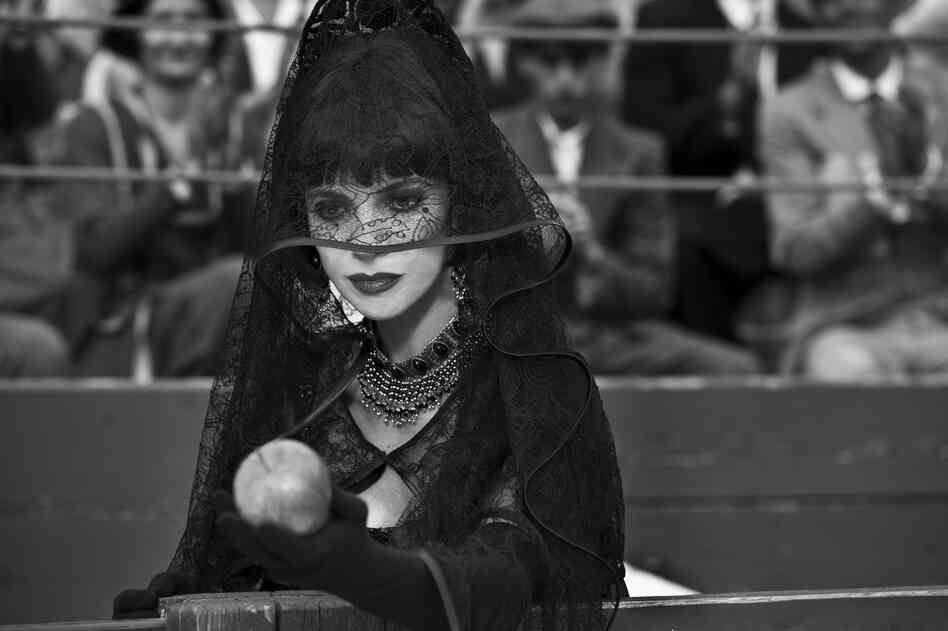
Iago Award for Most Cold-Blooded of Villains: Maribel Verdu as Encarna (Blancanieves)


           This wasn’t a particularly brilliant year for villains.  There were exceptions- Fassbender’s Epps in 12 Years A Slave and Cumberbatch’s Smaug were welcome screen presences- but the queen of evil in 2013 was undoubtedly Verdu’s Encarna in this black-and-white, silent, Spanish version of Sleeping Beauty.  Endlessly devious and wretched in her attempts to separate a father and his daughter, her crowning moment is a scene revolving around a bowl of chicken soup that practically froze my entire nervous system in horror.  Nope, not saying how.  Go see it, it’s an amazing movie that everyone should see anyway. 


Sequels Award for Most Improvement Within A Franchise: Catching Fire

            You might recall that The Hunger Games was my least-favorite film from last year, and it’s hard to find a better example of picking a franchise up off its feet than a film that leaps from “decent yet incompetently made” to “pretty damn good” in a matter of minutes.  Far better acting (see, Jennifer Lawrence, there's the talent David Russell's trying to hide!), but even more important, the movie has a much stronger sense of place.  The world feels way bigger and more real than it did last time around.  I’m still not in love with the series, but at least I’m solidly on board for the last two movies


Princess Peach Award for Most Abused Female Character: Pepper Pots (Ironman 3)

            Pepper Pots is Lava Woman.  She is indestructible, she can burn anything to nothing, and we must also assume she can now breathe fire.  Stop making her a DID (aka damsel in distress).  Stop punting her to the side so Robert can mug the camera some more.  Make her an Avenger.  She’s the only decent female character in the franchise.  Sorry Scarlett, but punching the dude from The Hurt Locker doesn’t mean you’ve now had a character arc. Seriously, I expect fire-breathing in Age of Ultron.  I have spoken.  


Luigi Award for Most Ignored Side Character: War Machine/Iron Patriot (Ironman 3)

            And speaking of DIDs, PLEASE stop making the franchise’s only black character not played by Mace Windu into one as well.  War Machine’s treatment in Ironman 3 was even more dismissive than that given to Pepper, and far more blatant.  Give him something to do next time.  Or, I dunno, maybe MAKE HIM AN AVENGER. 


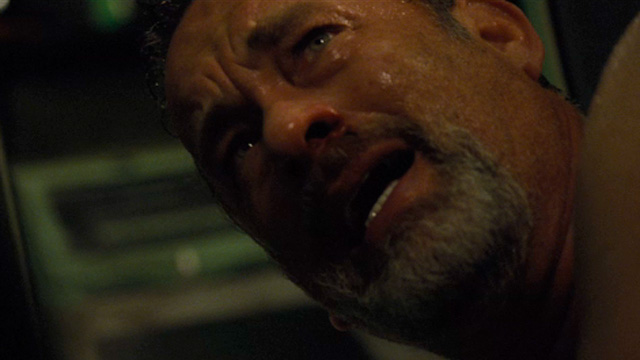
Milkshake Award for Best Two Minutes of Acting: Tom Hanks (for the last few scenes of Captain Phillips) 


           I’m not as high on this one as a lot of other critics are, but it is a genuinely great movie, and what really seals the deal are the film’s last few, ridiculously intense scenes showing the climax of the hostage crisis.  Tom Hanks’ performance was not my favorite of the year (that honor goes to Oscar Isaac in Inside Llewyn Davis), and he’s not the two-hour tour-de-force that Chiwetel Eijifor is in 12 Years A Slave, but his scenes before and after the pirates are killed and when he’s being examined on the Navy ship afterwards were my favorite single-scene acting moments of the year.  He already has two Oscars, so his lack of presence on the Oscar nominees list isn’t as bad a snub as Isaac’s, but it is a gaping hole nonetheless. 


Snorlax Award for Most Boring Snoozefest of a Film: The Hunt

             Currently, this is the “worst” movie of 2013 I’ve seen, although I have not yet seen American Hustle, which I am actively dreading.  Not that it’s bad- I still don’t think it is- I just thought it failed utterly in attempting to turn it’s very real and potent subject matter into anything of substantial interest.  I really hope the Foreign Language Oscar goes to something else. 


Shyamalan Award for Worst Plot Twist: Khan’s Jesus Blood (Star Trek: Into Darkness)

            I ranted about this to great length in my review of this movie, and I won’t bother repeating myself here.  It was stupid when the movie first came out, and it’s stupid now.  I no longer have high hopes for either the next Star Trek movie or the new Star Wars franchise.  In fact, I’m very, very worried.  Please, Mr. Abrams- put the twin holy grails of sci-fi on the ground, back away slowly, and no one else needs to get hurt.  
  

Broadbelt Award for Best Musical Number: “Let It Go” (Frozen) AND “The Death of Queen Jane” (Inside Llewyn Davis)

            These songs couldn’t be more different from each other in terms of sound, tone, and genre, and the same can be said of their respective movies as well.  Despite that, I’ve tied them for this award because they both serve essentially the same function- each is a major watershed moment for a specific main character and a significant turning point for the film as a whole, and they each fulfill this purpose brilliantly.  “Let It Go” is Elsa’s breaking out moment, her rejection of the confines of her childhood, a first tentative effort to fully assert not just her independence, but her very identity.  “Queen Jane” is, for Llewyn, his one real shot at breaking out of the seemingly endless cycle of failure he’s trapped in.  Making the scene even more emotionally charged is that he fully realizes this, and pours everything he has into the piece, only to be met by the simplest and most brutal of judgments- “I don’t see a lot of money in this.”  Two wonderful scenes, two wonderful movies. 


Avengers Award for Best Action Beats: Pacific Rim

            Screw the Academy for nominating Lone Ranger over this.  Who would have thought?  Wonderfully creative designs, made by someone with a genuine, honest-to-God tripod and a solid understanding of how to properly frame and shoot an action scene really are an excellent combination.  Some still say this just more dumb action.  I couldn't agree more.  It is simple, yes, but it's also genuine, and it's fun.  


Mel Brooks Award for Best Laugh-Out-Loud Comedy: Key of Life


           This movie was my ray of light during the doldrums of the summer blockbuster season- at least I’d seen one truly great movie already (actually, I’d seen three), one that I knew would be on my Top 10 list.  Full credit to the equally excellent World's End, but Key of Life had me laughing longer and harder than any other movie I saw this year.  


            And lastly, the 4-Star Club; the films I saw this year that, in my book, are 4/4 star movies. 

-Much Ado About Nothing
-Blancanieves
-Her

            I hope you enjoyed reading this list, because I very much enjoyed writing it.  My Top 10 and Oscar ballots will be out next month, along with any reviews I manage to write in between cramming for March 2nd.  So, until next time! 

-Noah Franc


Thursday, January 16, 2014

Review: The Secret Life of Walter Mitty

The Secret Life of Walter Mitty (2013): Written by Steve Conrad, directed by Ben Stiller.  Starring: Ben Stiller, Kristen Wiig, Shirley MacLaine, Adam Scott, Kathryn Hahn, Sean Penn, and Patton Oswalt.  Running Time: 114 minutes.  Based on the short story “The Secret Life of Walter Mitty,” by James Thurber. 

Rating: 3/4 Stars


            I’m rather surprised by the extent to which my thoughts on Walter Mitty echo those on Epic, another film featuring stunningly beautiful visuals somewhat undercut by a plot burdened by an excess of cliché and formula.  It has so many elements that could add up to not just a good movie, but a truly great one, if only it had been tweaked in the right places.  As it is, what we’ve been given, in a rare serious effort by Ben Stiller, is a genuinely well-made and fun film, one that I absolutely enjoyed and heartily recommend, but which is also brought low by enough problems that I can’t pretend to be surprised at its lackluster Rotten Tomatoes rating.  

            Like the earlier 1947 film, Mitty is a very, very loose adaptation of the original 1939 James Thurber short story.  Walter is a middle-aged, middle-class schlub, grinding away in the negatives department of Life magazine, when he and his co-workers are informed by Adam Scott’s Evil Corporate Facial Hair that the next print edition will be the last, meaning that a great many of their jobs are now at risk, especially Walter’s, whose expertise in film photography is obviously about to become redundant.  As a last hurrah, the intrepid photographer Steve O’Connell, played with impossible awesomeness by Sean Penn, sends what he considers to be one of his greatest photos ever for the final cover, along with a personal gift to Walter as a thank-you for working with his photos for so many years.  Unfortunately, said print seems to have been cut from the roll and is nowhere to be found, eventually leading Walter to embark on a journey across three continents in search of it, learning a number of valuable Life lessons along the way (hehehe). 

            The central conceit of Walter’s character, in both the story and film adaptations, is his tendency to escape from his mundane, everyman existence by drifting off into assorted flights of fancy.  In Ben Stiller’s version, these fantasies range from brief snatches of conversation he imagines having to full-blown fist fights with Adam Scott.  They’re played up more for comedy than anything else, which is one stark difference the movie has with the original story, where they were intended primarily as pessimistic reflections on the tendency of most people to fall back into escapism when confronted with uncomfortable realities.  Here, they’re treated as an almost adorable side-effect of a genuinely nice, intelligent guy too shy to work up the courage to ask out his office crush, Cheryl, played by Kristen Wiig. 

            It’s an intriguing effort by Ben Stiller, an indie-esque love/adventure comedy with the carefully-planned cinematography and effects budget of a summer blockbuster, an unexpected combination coming from the man who brought us Tropic Thunder and Zoolander, and one that I think works a lot more than most film critics have given it credit for.  I compared its visual flare to Epic for a reason- along with that, Gravity, Frozen and To The Wonder, Mitty is easily one of the most gorgeous films I’ve seen this year, with more than a few shot sequences that absolutely took my breath away.  The motto of Life magazine, extolling the virtues of living as much as possible, is brought into the scenery in some very clever ways, and is never treated with sarcasm or irony.  If nothing else, the film feels like it’s coming from a place of real honesty, and while that does result in the story trending hard towards schmulz territory in the third act, I never really minded, because it didn’t feel like the movie was doing so just to pander to me as a viewer.  If more rom-coms tried half as hard as Mitty does, I’d have far more patience for them. 

            It is true that the movie’s determinedly upbeat tone and somewhat cornbally ending are a decisive break with the more melancholic intentions of the Thurber parable, but while that does make Mitty a less-than-faithful adaptation, it doesn’t automatically make it a bad movie.  What DOES make it a lesser film is its incredibly forced use of product placement.  EHarmony plays a massive role in the story itself (Patton Oswalt, while providing a great turn as a nearly-unseen telephone operator and Mitty’s lone confidant, can’t help but remind the audience of just how AWESOME the site’s algorithms are), and Papa John’s, McDonald’s, Facebook, Cinnabon, Chase, FedEx, and KFC are all either referenced or given glaring cameos.  There’s also a terribly-placed and unnecessary Benjamin Button reference that nearly breaks one of the film’s better scenes, but it’s quickly dismissed once it’s over.  It could be that guaranteeing extended product placement was the only way the movie could finally be lifted off the launch pad- the movie had been discussed, planned, and casted several times for over 20 years before Stiller was brought in to star and direct- but given the lofty ambitions of the rest of the film and its wide visual scope, the moments that focus in on well-known labels or dialogue scraps that quote commercial mottos are often big distractions, and will probably ruin the effect of the film for a great many viewers. 

            There are story issues as well- the plot device of the missing photo is depressingly easy to figure out, especially given the movie’s otherwise determined efforts to portray Mitty as a reasonably smart guy.  Walter is also ostensibly supposed to be a normal person, a stand-in for most of its audience, but his rapid ascension into a grizzly adventurer by the end would seem to contradict this.  I think the distance this creates between the main character and the audience is, however, alleviated somewhat by Stiller’s own nicely underplayed performance.  It’s easily the best performance of his I can remember seeing, at least since Night At The Museum.  The story’s uncertainty about how to handle him notwithstanding, Stiller brings in more than enough of the quiet humility so essential to making the character work.  In fact, nearly all of the performances and relationships in the film are kept out of the kind of overly melodramatic territory you might expect from Stiller.  Walter has several very moving scenes with his family, Sean, Cheryl, and even his colleague from the negatives storehouse. 

            For all of the moments brought low by corporate shout-outs and a few questionable writing decisions, there are too many scenes the movie gets right for me to dismiss it the way so many other critics have; my favorite sequences include the film’s music-less opening, a fantasy of Cheryl singing “Ground Control to Major Tom” to inspire him to jump into a helicopter, his bike-and-skateboard expedition to an exploding Icelandic volcano, and an extended sequence of him being guided through the mountains by Sherpas, to name just a few. 

            It’s not hard to understand why so many critics have dismissed this work, especially since it had the bad luck to be in theaters in the same month as Wolf of Wall Street, Inside Llewyn Davis, American Hustle, Frozen, and other Oscar contenders, but at the same time, I think way too many people are overlooking this one.  Yes, there is a lot of formula and ham in it, and while it gets some good laughs, there are plenty of jokes that don’t work as well (like the kind of awful Button one).  Sometimes it bumbles, and occasionally it falls on its face, but on the occasions when everything in it clicks, it brushes so very close to genuine greatness.  For me, that makes The Secret Life of Walter Mitty more than worth watching. 


-Noah Franc  

Thursday, January 9, 2014

In Defense Of The Hobbit Movies


**Note: if you want no inkling of what will happen in the third movie and have not read the book, just to be safe, go no farther.  Unless, y’know, you don’t care.  In which case, carry on**

            If you’ve been following this blog since last December (of 2012), you are probably aware that I really, really liked both the first and second Hobbit movies.  I ended up seeing the first one four times in theaters (tied with The Dark Knight for my own personal record), and last week I saw Desolation Of Smaug for the second time as well.  I also rewatched the first again after my girlfriend got me the DVD for Christmas, and yeah, for me, it held up just fine.  I think both movies are very good (but not great) and very fun adventures, each with a few scenes of genuine excellence that really make me feel like I’m seeing the world of Tolkein come to life.   

            And apparently, I seem to be increasingly alone among my circle of friends who thinks that. 

            Alright, that’s not entirely true, I am not wholly alone in my opinion.  Both films have a plus 60% percent rating on Rotten Tomatoes, with a great many critics actually lauding the second one as even better than the first.  However, amongst my own circle of acquaintances, I’ve noted a range of opinions on the movies as divided as any I’ve ever encountered concerning a movie.  Some hated the first one and loved the second one, and some in reverse.  Some strongly dislike both, and feel that Jackson’s efforts to make the series a trilogy betray the original intent of the author by stretching 300 pages into 500+ minutes of movie.  One writer directly labeled the movie’s fight scenes as a "violent betrayal" of the anti-war message that pervades both The Hobbit and LOTR. 

            Let me first say that, for the most part, yes, I completely get where most of these criticisms are coming from.  Both Hobbit movies are far more noticeably flawed than LOTR was, even in its silliest moments.  And, as I’ve said twice now in my reviews, the films undercut themselves even more by drawing too much of the focus away from Bilbo (although a bit of that, which I’ll get to shortly, is perfectly justified).  However, I also think that a lot of said critiques overlook the series’ stronger points, along with a number of changes made to the source material that, honestly, I would have made myself had I been helming this project.   

            First off, let’s look at one of the most common complaints I’ve heard, which usually goes along the lines of, “You can’t make 300 pages of a children’s story into 500 minutes of movie!  You just can’t!”  Excuse my beginner’s-level French, but why the hell not?  There is no solid and accurate standard you can apply to find out the “right” translation of pages in a book to minutes in a film, because in both cases, the length doesn’t matter.  It’s the content and quality that does. 

            Obviously, there are instances where this argument does hold more water.  I’d be scratching my head as much as anyone if, for example, Jackson followed up the last Hobbit installment with plans to launch a new trilogy based on The Little Prince.  In regards to this particular franchise, I’m less-inclined to give ground to claims of the movies being over-long.  This is not to say that the Hobbit movies aren’t unnecessarily padded in spots, because they are; both could easily be 30-40 minutes shorter, and there was no reason to hold off on Smaug’s attack on Laketown. 

            However, having reread the book twice now since the first movie came out, to be quite honest guys, no, I do not think you could make a good, faithful adaptation of The Hobbit with a single, 2.5 hour movie- there are just too many plot elements and world details that would have to be set up in some way to make sure the movie makes even one iota of sense to people who didn't read the book.  Don’t believe me?  Well, let’s list the plot elements that are most essential to telling the story and establishing characters that Jackson has taken from the book so far- the party at Bag End, the encounter with the trolls (it’s Bilbo’s first taste of life in the wilder parts- plus it’s just plain funny), translating the runes at Rivendell, being captured by goblins and saved by Gandalf, Bilbo getting lost and finding the Ring (and Gollum), being cornered outside the mountain by wolves and saved by eagles, meeting Beorn and informing him of their quest, getting lost and twice-captured in Murkwood, escaping via the barrels and thus encountering the people of Laketown (all of which are more moments for Bilbo to shine as the story’s hero), becoming familiar with the people of Lake-Town, setting off to the mountain, finding the door, sending Bilbo down to meet Smaug, and pissing him off enough that he sails out to seek revenge on the humans. 

            That’s not even everything in the book- those are the most essential plot elements Jackson stuffed into the first two movies alone.  When you throw in all the stuff that comes later in the book, I’m convinced that any truly faithful adaptation would need at LEAST two movies of about 2.5 hours apiece, and given that Jackson is making a thus-far interesting effort to include materials from the Appendices, I honestly have no problem with this book also being made into a trilogy.  So, in short, I get some complaints with the time, but for the most part, I never care about length unless the film is REEEEAAAAALLY dragging its feet, which these movies definitely don’t do.  At least, not too much. 

            Now, for specifics, here’s a few other aspects of the film that I really, really like, things that more than up for their flaws (in my book).   

First, and most importantly, Martin Freeman is perfect as Bilbo

            This is the hinge upon which this entire series turns.  Yes, fellow purists, I did notice that he’s noticeably younger than Ian Holm in Fellowship, and yes, that is a not-insignificant break with the books, where it’s clearly established that he doesn’t visibly age in the 60 years between each story.  Quite frankly, I don’t care, because Martin Freeman captures the essence of this character just as well as Sean Astin nailed it as Sam.  His scenes, be they straight from the book or improvised, are easily the best of both movies.  He stammers, he feels overwhelmed, he gets frightened, but he also brings across Bilbo’s cleverness, courage, and ultimately big heart that give The Hobbit its much-needed emotional center.    

In the book, the dwarves are royal douchebags

            The first time I reread The Hobbit this past year, the first time since Middle School I’d picked it up, I was legitimately shocked at how, well, douchy the dwarves are to Bilbo.  I don’t mean that they’re hapless- that’s part of the joke in the book, although the movie does alter than as well- I mean that they go out of their way, at every turn, to blame each and every misfortune that occurs on the hobbit, and they all then proceed to sit on their hands until Bilbo, grumbling with exasperation, comes up with a solution.  I’m fine with that in the book, since the focus is nearly entirely on Bilbo anyway, but in a movie, I’d much rather have 12 goofy dwarf sidekicks (and Thorin) that I actually have SOME feelings of affection for.  Thorin is properly dignified as a dwarf king, Balin and Bofur get some nice moments with Bilbo, and while the others are varying shades of goofy and hapless like in the book, at least they aren’t perpetual whiners.  Imagine spending a trilogy of movies listening to THAT. 

            While we’re on the topic of dwarves…..

If you think the dwarves have little to no distinct characteristics in the movies, they have even less in the book

            No, the movies haven’t given us 12 distinct and memorable characters, but at least we can pick out Balin, Bofur, Dwalin, Bombur, Fili, and Kili from the crowd.  In the book, Thorin is the ONLY one of the dwarves with any identifiable characteristics, not to mention his own plot arc.  Bombur is the fat one.  Kili and Fili are “the young ones.”  And that’s all Tolkein gives us.  Nothing else is offered to help us form 12 different images in our heads.  Give Jackson credit for not only making the dwarves funny and likable, but also managing to make at least half of them memorable to some degree. 

Jackson takes the time to show us Bard and The Master and set up their conflict BEFORE Smaug burns Laketown to a crisp

            Yes, The Master and Bard are indeed in the book, but The Master gets the briefest of introductions when the party first arrives, and Bard is practically an after-thought, only mentioned AFTER Smaug starts burning everything.  And it’s not until even later that we are told about their personal political conflict, when the people suddenly proclaim that they want Bard as King, and Tolkein says, in a very simplified nutshell, “Oh yeah, and the guy who killed Smaug just happens to be from an old line of kings, also The Master’s a greedy porkface.  Hijinks will ensue!” 

            Why do I like Jackson’s version more?  Because it gives us a reason to care about what happens to the town- we’ve now seen bits of the people and the poverty in which they live, and we’ve seen enough to know that Bard is this film’s version of Aragorn and that The Master is basically Grima with extra pillows in his nightie.  Contrary to what you might think, this is of no small importance, because the struggle between Bard and The Master, along with the fate of Laketown, is a huge factor that drives the plot after the dragon dies, not only for Bilbo and the dwarves, but also for the involvement of the elves and the huge battle that ends everything.  ANY decent adaptation would have to spend time on this anyway, so, in my opinion, good on Jackson for getting this part out of the way before all the insanity hits the fan in the next movie. 

The inclusion of Radagast

            I know, I know this one’s controversial, and even I find the bird-poop hair and rabbit sled too much, but honestly, if there was one thing that disappointed me about LOTR the first time I read it, it was how short a stick Radagast gets in the two pages or so that he gets.  I’ve ached for the chance to get more of the other Istari, and while I won’t hold out hope that the blue wizards will appear in the finale (although that would easily be its own special flavor of AWESOME), I’m perfectly happy to see Radagast get a couple of chances to shine in this series.  Hopefully he gets some cool things to do in the last movie. 

            Speaking of wizards….

We are reminded that Saruman wasn’t always an evil tool

            We get absolutely nothing in any of the LOTR movies to indicate that Saruman was anything other than a diabolical mastermind waiting to crack, so even though it didn’t drive the story very much, I liked seeing him and Gandalf get to interact in a normal friendly manner (and they will most likely do so again in the last movie).  It’s a nice reminder that the man did start out as the Middle Earth equivalent of an angel. 

All the stuff with the Necromancer is both relevant to the plot and….well…..cool

            I love the scenes involving the Necromancer.  Yeah, in the book he’s not the direct cause of the goblin armies massing for an assault of the mountain, but his presence is the reason why Gandalf abandons the dwarves seemingly at random several times.  And it IS established in the book that he, Saruman, and the other Istari drove the Necromancer out right before the big battle, so…..yeah, why not throw it in to the movies?  It’s a chance to give non-readers more of Sauron’s history, plus it’s just always cool to see Gandalf do magic stuff.  

The party at Bilbo’s, the encounter with trolls, Bilbo’s game of riddles with Gollum, the spider attack, the barrel-ride, and all of Bilbo’s encounter with Smaug

            These are the parts of the movie that stick closest to the book (barrel-riding aside), in many cases nearly word-for-word, and they all rank among Bilbo’s smartest/funniest/most awesome moments in the overall story, so it’s small wonder that they are also my favorites parts of both movies.  Even the barrel-riding segment, stretched to an absurd extreme with pursuing goblins and elves, is the right kind of exuberant excess; rollicking, try-and-not-laugh-at-this fun.  The motion capture technology used for both Gollum and Smaug is as incredible to see as ever, and Benedict Cumberbatch proved himself to be just as perfect for Smaug as Andy Serkis was for Smeagol.  They are the parts that, for me, best capture the world of Middle Earth, along with the overall tone of the book.  More than anything else, the chance to see these (and a few other) moments brought to life on the big screen are more than enough reason for me to never regret purchasing the tickets to my (thus far) half-dozen showings of these movies. 

            In summation, those are my primary reasons for liking and being very happy with this film series.  Do I get bothered by the other flaws with them?  Of course.  Do I wish that both movies didn’t drag as much towards the end?  Yes I do.  But, in a way, the fact that I enjoy both movies so much, even though their problems are very, very visible, is another testament to the strength, staying power, and imaginative force of the world Tolkein created.  Even when done in a flawed, egotistical, and overly excessive manner, there’s something irresistible about the man’s stories, something that always manages to shine through, no matter how flawed or great the adaptation is.  Hell, I’ve seen a staged KIDS version of The Hobbit (no I am not joking), and even that managed to hold my attention 'til the end.   

            So even though these movies can easily be argued over and debated for hours on end, at least they give something interesting to talk about.  This journey may not be quite as epic as the last one, but I am very, very glad to be a part of it, and I will be a  genuinely sad man indeed when I no longer have any Middle Earth movies to look forward to seeing in theaters. 

-Noah Franc


Monday, December 30, 2013

Review: Blue Is The Warmest Color

Blue Is The Warmest Color (2013): Written by Abdellatif Kechiche and Ghalia Lacroix, directed by Abdellatif Kechiche.  Starring: Adèle Exarchopoulos and Léa Seydoux.  Running Time: 179 minutes.  Based on the graphic novel Blue Angel by Julie Maroh.   

Rating: 3.5/4 

            Having finally seen Blue Is The Warmest Color (La Vie d'Adèle – Chapitres 1 & 2 in the original French), it’s no longer a wonder to me why the jury at Cannes decided to break with tradition and give its highest award, the Palme d’Or, not just to the director, but also to the two lead actresses.  The level of determined commitment necessary to produce two such performances is beyond my ability to quantify, and watching the two main characters be so vividly brought to life over the movie’s immense running time is a marvel to behold.  And believe or not, I’m not just talking about the movie’s much-lauded, heavily-debated, and frequently-criticized sex scenes.  There is a lot of nakedness in this movie, but only a fraction of it is physical.

            Adèle (Adèle Exarchopoulos) is a fairly normal French teenager- she goes to school, she studies, she flirts- and as the movie opens, she is just beginning to explore her budding sexuality.  Partially due to constant urging by her friends, she decides to give "regular" sex a shot with a guy from another class, only to feel afterwards that it was nothing special.  Shortly afterwards, she’s spontaneously kissed by a girl from her class, and begins to think she might be a lesbian.  She has a gay friend of hers take her to a few bars, where she stumbles into a blue-haired woman she passed on the street awhile back, named Emma (Léa Seydoux). 

            In a short amount of time- it’s not quite clear how short, the movie makes no effort to keep track of time- they start dating and having very intense sex, and after a few years they are living together.  Adèle is a Kindergarten teacher while Emma pursues her painting in the hopes of being shown in a major exhibit.  This normal, everyday existence starts to inevitably cool their once white-hot passion for each other, leading to a seemingly inevitable separation, which Emma seems to handle far better than Adèle can.   

            I’ll drop my summation of the story there, because that’s really all there is to it- this 3-hour marathon of a film is focused solely on a tale of once-passionate romance slowly fading away.  While there are ten thousand and one other movies that tell the exact same story, what makes Blue so unique, so engrossing, and so very much worth seeing is its determination to show every gritty part of Adèle’s growth (or lack thereof) from a frustrated, lonely teenager to a frustrated, lonely young woman.  And I really do mean every gritty part- her wonder, her happiness, her feelings of attraction and love, her orgasms, her pains and fears, and eventually, her heart-rending agonies- everything is put on full view for us in the audience, and the end result is something wholly, and in my opinion beautifully, unique. 

            Having read through quite a few reviews and commentaries ranging from the overwhelmingly positive to the harshly negative concerning the film’s depiction of a) sex and sexuality in general and b) homosexuality specifically, and having spent the better parts of two weeks trying to figure out what I can add to the debates, I think I fall somewhere in the middle in regards to both those topics and the quality of the film as a whole.  I definitely think it’s one of the year’s better films and is definitely worth watching, but it won’t crack my Top 10 list, mostly because long, slow-burning relationship dramas, no matter how well made (and this one is very well-made) simply aren’t my cup of tea. 

            In regards to the two more controversial aspects of the film, I’ll start by addressing its treatment of sexuality.  Yes, even though it’s a movie about an ostensibly “normal” relationship, both female leads fit right into most conventional definitions of what makes a woman “sexually attractive.”  Yes, they are being filmed by a straight, male director (who, according to the actresses themselves, was an absolute terror to work with).  And yes, the camera lingers for very long periods of time on just about every part of their bodies, sometimes for several minutes at a time.  Given all that, although I personally didn’t find the film to be voyeuristic, pornographic, or sexist in its tone and treatment of the female body, I can definitely understand why those labels and many, many others have been applied to the film by a great many viewers and critics.  I too am a straight man, so it is entirely possible that that fact alone made me less inclined to feel offended said scenes.  

            It has also been noted time and again that, even though this is “supposedly” a lesbian film, no out-of-the-closet lesbian was involved in its production, either on- or off-screen.  This has been the basis of a great many criticisms that the movie is trying to “accurately” show female homosexuality without actually having an understanding of it, thus making it less of a great movie and more of a pretentious, arrogant, arthouse display of the male gaze in action.  I disagree.  Yes, it’s a relationship drama, and the relationship in question happens to be that of a lesbian couple, but there’s nothing else in the movie, be it in the dialogue, the shot composition, or anything else, that tries to reach out and make any sort of statement about homosexuality.  Even Adèle’s identity as a lesbian can easily be called into question- she never openly declares herself to be a lesbian, and even at the end, when we learn about various post-Emma affairs she’s had, we learn that plenty of them were with men, suggesting that her entire relationship with Emma was less of a realization of who she really is, and was instead merely another part of her personal journey, with no indication by the end where said journey will end, or even if it will end.  Which, for me, is ultimately one of the film's greatest strengths.

            So, honestly, I think that discussions about the film’s pedigree as a “lesbian” film are sort of missing the point- it’s not trying to be a film ABOUT homosexuality any more than it tries to be a film about French philosophy.  The only thing it tries to be is a straightforward, undistracted, and brutally unyielding glimpse into a relationship made achingly real by the power of its leads.  And what a glimpse it is.  Whether you end up loving or hating it, and there will be a lot of people in both parties, if you can stomach the running time, this is another must-see for the already-crowded holidays. 


-Noah Franc 

Saturday, December 21, 2013

Review- The Hobbit: The Desolation of Smaug

The Hobbit: The Desolation of Smaug (2013): Written by Peter Jackson, Fran Walsh, Philippa Boyens, and Guillermo del Toro, and directed by Peter Jackson.  Starring: Martin Freeman, Ian McKellan, Richard Armitage, Benedict Cumberbatch, Evangeline Lilly, Lee Pace, Luke Evans, Ken Stott, James Nesbitt, and Orlando Bloom.  Music by: Howard Shore.  Running Time: 161 minutes.  Based on The Hobbit by J.R.R. Tolkein. 

Rating: 3.5/4


            As good as Desolation of Smaug is- and it is very good, in some ways better than last year’s opening feature- I can’t help but feel worried for the finale next year, because Smaug chooses to end before any of the really major events of the book go down.  Given the fact that, in addition to the story of the book itself, this trilogy has also committed to throwing in an outside story about the Necromancer, next year’s conclusion to the Hobbit trilogy is going to be stuffed to the gills with plot.  That’s not to say that Jackson can’t pull it off- he did so handsomely in Return of the King, and there’s no indication thus far that he can’t do so again, even though this series will never hold a candle to its predecessor.  However, that is a question to be dealt with in a year’s time, when the trilogy will be complete and we can finally look at this new set of LOTR movies as an aggregate whole.  For now, I’m content to enjoy Smaug for what it is; another rollickingly enjoyable Middle Earth adventure. 

            After getting a glimpse of how and why Thorin and Gandalf teamed up to start the quest, we jump right back into the middle of the main story.  Bilbo and the dwarves take brief refuge in the home of Beorn, a Skin-Changer who agrees to guide them to the edges of Murkwood, through which they must go if they are to arrive at the mountain on time to open the secret door mentioned in the last film.  They are still being pursued by good ‘ol Whitey, but he is soon called back to the lair where the Necromancer is building a new goblin army to prepare them for war (this part should actually tie into the end of the book very well). 

            Unable to find their way through the woods, the dwarves are briefly captured by man-eating spiders before Bilbo is able to save them using the ring.  Said salvation is brief though, as they are almost immediately captured again, this time by the Wood Elves, led by Prince Legolas, who at this point in his life was still very anti-dwarf.  It’s actually quite nice to see Orlando Bloom back in a role that suits him.  Obviously his presence is a marked deviation from the book, but it’s a welcome one.  Another deviation is his companion/obvious love interest, Tauriel, Captain of the Guard, one of Jackon’s better deus ex machine devices, who soon develops feelings for the dwarf Fili.  Thus far, this setup barely qualifies as a love triangle, and if Jackson knows what’s good for him, he’ll keep it that way.  I actually don’t mind the idea of a dwarf-elf romance as a subplot, it would let the movies dig a bit more into the complex inter-species politics of Middle Earth.  What DOES bother me is that the one dwarf singled out for a romance is the one that looks much less like a dwarf and more like a Vogue model in mini. 

            Bilbo, in yet another clever rescue attempt, is soon able to steal the keys and ushers the dwarves into a collection of empty wine barrels bound for Esgaroth, the small lake-town built by the survivors of Smaug’s attack on Dale.  They eventually run into Bard, descendant of the old rulers of Dale, who smuggles them into the city, currently under the iron fist of the fat and greedy Master of Lake Town, who agrees to help Thorin for his own blindly selfish reasons.  Unlike Legolas or Tauriel, Luke Evans’ Bard is a character from the book, but his role here as the proverbial “good guy” is a significant expansion of Jackson's making.  And like with Legolas and Tauriel, it's a good one, as it allows us to have a more emotional connection to the people who eventually bear the brunt of Smaug’s wrath. 

            Before you ask, yes, the barrel-riding scene is a VERY gratuitously long sequence, but it’s the abjectly and absurdly fun kind of gratuitous.  It may, strictly speaking, be “unnecessary,” but bringing the word “unnecessary” into discussions of cinematic fantasy is a slippery slope when not carefully managed because, strictly speaking, no fantasy tale, no movie (or any art for that matter), is “necessary.”  So I prefer to content myself with the question, “Is it fun enough to justify its existence?”  And in my opinion, hell yes, it absolutely is, although I fully sympathize with those who find it as excessive as the Misty Mountain fight in An Unexpected Journey. 

            Even more fun, though, is pretty much the entire third act of the movie, after the dwarves enter the mountain and finally encounter Smaug.  It’s rather telling that out of the FIVE full-length movies he’s appeared in this year (no really, FIVE), Smaug is the finest performance Benedict Cumberbatch graced us with in 2013.  With a voice so rich, so mellow, and yet so full of viciously clever villainy, the appearance of Smaug and his entire conversation with Bilbo is more than enough to justify the price of admission.  The Hobbit series, thus far, has had many, many flaws, and has probably broken a few hearts as well, but thank Jesus, they nailed it with Smaug.  Like with Gollum in the original trilogy, Smaug could have gone so horribly, terribly wrong, and they just GOT it here.  It’s a shame they don’t give him a belly covered in gemstones, like in the book, but the voice and writing is so spot-on, I couldn’t bring myself to care. 

            Again though, like its predecessor, Smaug is brought down a peg by what is, in the end, the only flaw of any real consequence in these films, and that is the relatively large stretches of time where Bilbo is literally nowhere to be seen.  Again, like with the last one, the time away from Bilbo and the quest is not really bad, per say- we get some great world building with the petty Elvin King Thranduil, Gandalf gets some cool moments investigating the mystery of the Necromancer (who is really Sauron, completely unnecessary spoiler), we get a strong feel for the corrupt poverty of Esgaroth, and all of it is very well-made and acted.  In a rather perverse way, the only real problem with all that is that Martin Freeman is just so damn good as Bilbo, it almost feels like a waste when we’re deprived of more time to watch him grimace, gulp, and do constant double-takes when something newly horrible comes along, only to find a way to overcome it. 

            For me, this is epitomized by the fact that the movie never once mentions that the day of the gang’s arrival in Esgaroth is Bilbo’s 51st birthday.  For all the tiny tidbits Jackson brings to life with his cinematic magic, that piece was apparently too small to worry about.  And, if I am to be honest, when I first realized that as the credits rolled, I felt a small yet distinct sadness.  In a world full of powerful races, kings, wizards, and schemers, the hobbit characters consistently provide the heart and soul that make Middle Earth a world caring about.  And when that heart is missing, the rest of the movie suffers as a result.  It’s there in the beginning, it’s there in the end, but in the middle it drops out a few times too often.  It does not ruin this particular movie for me, but how it’s handled in the final installment will be the crucial dividing line between this trilogy being truly great, and being just very good.           


-Noah Franc   

Friday, December 20, 2013

Review: Catching Fire

Catching Fire (2013): Written by Simon Beaufoy and Michael deBruyn, directed by Francis Lawrence.  Starring: Jennifer Lawrence, Josh Hutcherson, Liam Hemsworth, Woody Harrelson, Jena Malone, Elizabeth Banks, Lenny Kravitz, Philip Seymour Hoffman, Jeffrey Wright, Stanley Tucci, and the Master himself, Donald Sutherland.  Running Time: 146 minutes.  Based on The Hunger Games trilogy by Suzanne Collins. 

Rating: 3/4 


            I’m really quite astonished at the difference in quality between Catching Fire and The Hunger Games.  Any of you who actually read my Top 10 list of 2012 last winter may recall that The Hunger Games was (in my opinion) the least well-made movie I happened to see that year, and nearly 12 months later, I stand by my initial opinion of the film- it’s characters and reality-show spin on the well-known Battle Royale formula interested me enough to get me to pick up the books (of which I am now a shameless fan), but I can’t call it a “good” movie by any stretch of the imagination.  The direction and screenplay were average at best, the acting was astonishingly wooden given the high-caliber cast they’d thrown together, the settings, designs, and effects were depressingly cheap, and the whole effect was further damaged by truly awful camerawork.  Thankfully, Catching Fire is a big step up from the first film on almost every level, and even if it falls shy of being a truly great film, it’s encouraging that the franchise seems to be picking up some much-needed steam heading into its second half. 

            We pick up where the first movie ended, with Katniss and Peeta returning “triumphantly” to District 12 after the Games, where they now live in stately, comfortable houses built solely for victors.  Nothing returns to normal though, because not only are they haunted by memories of the Games, they are also haunted by the “perfect love story” reality-TV ruse that got them out of it, because- as we learn in bits and pieces- most of the Districts never bought the love story, and are instead using Katniss as a symbol of resistance and rebellion. 

            For obvious reasons, this leaves a bad taste in the mouth of Donald Sutherland’s President Snow, who is still the best character being given the best performance in the entire series.  He shows up at Katniss’ house to lay down the gauntlet- either Katniss fully immerses herself in the innocent, love-struck girl she’s pretending to be, to the point where even he believes it, or her family will be killed, no ifs, ands, or buts about it.  Oh, and Kale will be killed too.  Remember him?  No?  Well, no worries, you’ll never have any reason to.    

            Her trial-by-fire soon arrives in the form of the Victory Tour, visiting each District in turn to honor their dead, and her resolve is immediately tested when she arrives at 11 and finds a massive, holographic image of Rhue staring at her from the middle of the square.  Right away we’re off to a good start, as the tour gives Catching Fire a lot more time to flesh out the many economic and cultural features of the world meant as analogies and/or parodies of our own- massive structural inequality, the cult of celebrity, the vapid shallowness of reality TV and popular culture, etc. etc.  It’s a crucial bit of world-building that the first movie never took the time to dig into, and the psychological strain it puts on Katniss finally gives Jennifer Lawrence the chance to show off the acting skills that BOTH of her big movies from last year determinedly tried to hide. 

            She’s not the only one to make strides though- Josh Hutcherson was as blank a slate as it gets last time around, but here, he also gets to break out a bit of emotional variety for Peeta, and the movie takes a few tentative steps towards making the burgeoning relationship between him and Katniss somewhat believable.  And no, that’s not a spoiler- nothing involving the awfully unnecessary love triangle counts as a spoiler.  Also, Woody Harrelson deserves due credit for proving that, like Javier Bardem, he is one of the few actors skilled enough to work through a terrible haircut.    

            As I said though, this movie is still far from perfect.  Philip Seymour Hoffman is criminally underused as the new Gamemaker; for whatever reason, he seems to have mysteriously left his charisma at home the day they shot his scenes.  There are two excellent moments where Katniss and Peeta delve into the PTSD side of surviving a blood sport, but both are over in a heartbeat and are never revisited again.  Which is a real shame, because this whole series is a golden psychological playground, and a bit more focus on how brutally the whole scenario begins to warp Katniss’ psyche would have done wonders.  The movie also starts to repeat most of the first film when we inevitably return to the Games (that’s not a spoiler either, it was in the trailers), and nearly all of that is just another 10 rounds of Forest Tag.  However, both that and the love triangle are flaws directly carried over from the books, so it would be churlishly unfair to fault the movies for them. 

            There are also plot-holes out the sports arena, and the entire political system that supports the Games seems so hilariously flimsy that you can’t help but think, “It took them a whole 75 years to get a revolution off the ground, and even then it’s started by berries?”  Hell, President Snow even ADMITS how ridiculous it is that simple berries could unwind decades of oppression.  The books can be easily accused of this as well, but I tend to overlook this because it's ultimately secondary to the series’ primary purpose, i.e., to rail against economic inequality, and to deride how pop culture and celebrity cults can (and indeed are) used to distract people from noticing systematic injustice.  In a way, it’s similar to the many story issues with the Marvel movies- I can’t blame people for harping on them, but on the other hand, I think focusing on them mostly misses the point of the series. 

            I think what I appreciate most about Catching Fire is that it achieves a sense of bigness that the first film, once again, sorely lacked.  For all its aspirations to be a social and political commentary, The Hunger Games is also meant to be a sprawling, sci-fi epic, and this time around, the world of the films really starts to come into its own.  We don’t see nearly enough of any of the Districts, but we do get to see a LOT more of the Capital, and even though the second Games takes place in yet another forest, it’s shot far better than the first one, making it easier for the viewers to keep track of exactly where Katniss and her friends are within the maze. 

            It won’t crack my Top 10, but Catching Fire is a well-made, well-acted, and very engaging sequel, and if they manage to pull off the finale right, we’ll look back at this flick as the franchise’s key turning point.  It seems the odds are finally in this series’ favor. 

-Noah Franc